2.28.2006

Lenten Blogging Fast


In preparation for the Resurrection of our Lord, I will be fasting from blogging on both BeggarsAll and LutheransandContraception. If that and my fasting from beer and other carbohydrates (are there other carbohydrates?) doesn't kill me, I'll be back after Easter Sunday.

Lenten blessings to you all,

Caspar

2.27.2006

Birth Control to be Outlawed in New Town

Returning to those black and white days of the baby-boom of the 1940s and 50s - the theme of Pleasantville in reverse!


Pleasantville was a comedy about two '90s kids shockingly thrust into the black-and-white TV world of Pleasantville, a Leave It to Beaver-style town complete with picket fences, corner malt shop, and warm chocolate chip cookies, where everyone knew right from wrong. This time-travel occurs when a one-of-a-kind remote control (provided by repairman Don Knotts, who I'm very sorry to report died this past Saturday of lung cancer) transports them from the real world to the obligatory G-rated TV land. They are forced to play along as "Bud" and "Mary Sue," the obedient children of George and Betty Parker. Mary Sue starts shaking the town up, most notably when she takes basketball stud Skip up to Lover's Lane for some modern-day fun and games. Soon enough, Pleasantville's teens are discovering sex along with rock & roll, free thinking, and soul-changing Technicolor. The movie gradually transforms from all black and white to color, building by building and skirt by shirt.

Now, imagine this process in reverse...

Domino's Pizza Founder Plans "Catholic Only" Town
February 27, 2006 2:00 p.m. EST
Julie Farby - All Headline News Staff Writer

Detroit, Michigan (AHN)—A former marine who was raised by nuns and made a fortune selling pizza has embarked on a plan to build the first town in America to be run according to strict Catholic principles, the Times reports. Tom Monaghan, the founder of the Domino’s Pizza chain, has stirred protests from civil rights activists by declaring that Ave Maria’s pharmacies will not be allowed to sell condoms or birth control pills. The town’s cable television network will carry no X-rated channels.

Read more
HERE.
________________________________________

I'm concerned about the pietism of this Amish-style retreat from the world. However, there is no indication that these people will never leave the town, like poor Jim Carrey in The Truman Show, or the sheltered children in The Village. This RC town could be a shining example of what life under a
government that pays attention to God's law could be without the error of the Amish of avoiding all innovation. I'd love to live in a works-righteous Roman Catholic town! Unfortunately, NFP will probably be legal - though serious Roman Catholics know that it is officially only sanctioned for extreme cases.

I think this would probably be an excellent place to live and raise a family if one could find a confessional Lutheran church nearby. I wonder if we Lutheran "catholics" would be welcome to purchase real estate in this new town. Alas, I believe the ideals of Tom Monaghan are doomed to failure, as legal battles will likely prevent such a town from ever existing. Let's see how long South Dakota's ban on abortion lasts.

A good article from Touchstone

I'm in a poasting links kind of mood today. Here's a really good one.


The question is, where is your treasure? And this question is for fathers as well as for mothers. Is your treasure your job, your career, your earning power, your advancement, your house, your car, your vacation, your computer, your money, and the things that money can buy? Or is your treasure your children? For where your treasure is, there also your heart will be.

Something Applicable from a Pastor I trust...

This would make Caspar happy.

World Population Hits 6.5 Billion!

Oh no!!! We're all going to starve to death!!!!!!

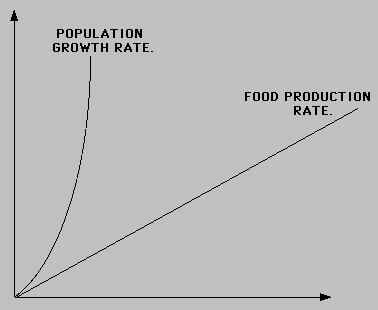
According to the best calculations available to modern man, on Saturday, Feb. 25, at 7:16 p.m. Eastern Standard Time, the population of the world hit 6.5 billion people. Thomas Malthus, the British economist who famously predicted in 1798 that the world’s population - then just under a billion - was growing so fast that people would soon be without enough to eat. In the days of the Industrial Revolution he formulated his notorious "law of population" which asserts that while food supplies expand only arithmetically, population soars geometrically.

This theory, with its controlling factors of survival of the fittest through famine and war, influenced the birth of Darwin's theory of "natural selection" and ultimately the eugenics movements of Margaret Sanger and Adolf Hitler. The popularization of family planning for undesirables led to its acceptance for undesired pregnancies, and thus the philosophy of the "pro-choice" movement of planned parenthood and the legalization of abortion: The death of the West! The western world is now at below replacement level fertility, while Muslims continue to procreate since they have not forsaken Islam's hatred of birth control.

The theory of Malthus has since been proven wrong (we're still here!), but we're stuck with all the subsequent sequelae of his preaching. Technological improvements have shown themselves to be so great that a much more rapid increase in food production (than in population) has been possible for centuries. The world is not just surviving, it's generally FAT! There are areas which experience famines, but these are not caused by population problems. Famines are associated with naturally-occurring crop failure and pestilence, but more today because of war and genocide.

We Christians must continually remind ourselves in this postmodern world that we can and should trust in the goodness of God in providing what is necessary for body and soul. The Western culture's myth of overpopulation has led us today to have below replacement level fertility in the West. We are looking today at the impending death of the West because of the suicidal mindset of "planned parenthood."

Caspar

2.23.2006

Trusting God to Plan Your Family


Relative to the exchanges Devona and I have had in the most recent posts below, it seems appropriate to proceed to the final point of the LCR document.

10. God desires that we put our trust in Him in all matters, also in His will and ability to provide for the children that He gives us (Exod. 23:20,26; Psalm 30:7; 37:25f.; Phil 4:13; 1 Pet. 5:7).


Exodus 23:20

“Behold, I send an Angel before you to keep you in the way and to bring you into the place which I have prepared.


Exodus 23:26

No one shall suffer miscarriage or be barren in your land; I will fulfill the number of your days.


Psalm 30:7

LORD, by Your favor You have made my mountain stand strong;
You hid Your face, and I was troubled.


Psalm 37:25

I have been young, and now am old;
Yet I have not seen the righteous forsaken,
Nor his descendants begging bread.


Philippians 4:13

I can do all things through Christ who strengthens me.


1 Peter 5:7

...casting all your care upon Him, for He cares for you.


And, at the risk of being repetative, here I quote Luther again:

Although it is very easy to marry a wife, it is very difficult to support her along with the children and the household. Accordingly, no one notices this faith of Jacob. Indeed, many hate fertility in a wife for the sole reason that the offspring must be supported and brought up. For this is what they commonly say: “Why should I marry a wife when I am a pauper and a beggar? I would rather bear the burden of poverty alone and not load myself with misery and want.” But this blame is unjustly fastened on marriage and fruitfulness. Indeed, you are indicting your unbelief by distrusting God’s goodness, and you are bringing greater misery upon yourself by disparaging God’s blessing. For if you had trust in God’s grace and promises, you would undoubtedly be supported. But because you do not hope in the Lord, you will never prosper.

[Luther's works, vol. 5: Lectures on Genesis, page 332]

2.21.2006

Read the post below this one first.

A definition of Natural Family Planning, by a woman who uses it.

This will not likely change Caspar's opinion of what NFP is. But it might help some of our readers (are there any left?) to understand what NFP is since it is widely misunderstood.

NFP is the understanding and charting of a woman's fertility. That's it. It is simply the knowledge of when a couple can, and cannot conceive. What a couple chooses to do with that knowledge is not defined by NFP.

My husband, Rob, and I do practice NFP although we have never used it to avoid conceiving. In fact, we used it to conceive with this current pregnancy. I chart with NFP (sometimes more regularly than others) in order to know my body, mostly so that I will know if something is wrong with me if things change. We don't have any reasons to avoid children, and likely won't have any in the future, Lord willing. It will be good to know when to abstain, though, if anything should arise in our lives which would necessitate avoiding conception (see post below).

The thing that makes NFP different than any other form of contraception is that it is a hibernating form of contraception unless you choose to abstain. And if you do choose to abstain for one day of your fertile period, you have the chance to change your mind tomorrow. You have not avoided conception until you have continuously abstained for the whole of a woman's fertile period which lasts 7 to 10 days.

Sin and why I don't think all contraception is sinful

I have to apologize for my lack of scripture and confessional references. I do not have a profession which allows for extended free study time (all I have time to read is Where the Wild Things Are), and so you'll have to accept that my opinion is based on my basic understanding of Scripture and the Confessions. But that's all I have, a basic understanding.

Caspar believes that all contraception is sinful. I disagree, though. Rather, I believe that if it weren't for Sin (the state of mankind since the fall) contraception would never be necessary, but that is not the case.

It is easy to view the world through the lens of our own lives, and from where Americans sit, there are extremely few selfless reasons to contracept. We have cushy lives with cheap water and fuel, lots of food that's easy to come by, and most of us have jobs that support our families as well as buy us really awesome cars and TVs. But since Sin is a reality, this cushy life is not the norm for the rest of the world. And there are Christians in much more dire lives than we could ever imagine. As well, there are Christians in America dyeing of Cancer and Diabetes. There are any number of ways that Sin is eating away at the good things that God wants to bless us with, and it isn't any one specific person's fault, it's the whole world's fault.

So what's your point, Devona?

My point is that I do not believe that it is sinful for a married couple in China to avoid conception when they already have a child. While it is no longer "illegal" to have more than one child in China, there was recently a story on NPR about a pregnant woman in China. This was her second child and so she went into hiding. The local authorities discovered her and forced her to have an abortion just days before her due date and then forcefully sterilized her.

To avoid this fate, a Christian couple in China might choose to abstain during their fertile periods to avoid contraception. If I were to go visit them and say, "God forbids all contraception, even abstinence," what would that do to their faith? If I were to say, "I understand that you are just choosing the lesser of two evils," what would that do to their faith? Instead, I should mourn for them and the crush of Sin (not personal sin, but Sin) and offer them the Gospel of Christ which says that the evil of the world which we are all guilty of by Adam is crushed by Jesus' death on the cross, Amen!

Or what about the American couple whose wife suffers from bloodclots during pregnancy and is at risk of death. If they choose to abstain from conceiving would it be a comfort to them to say, "it is the lesser of two evils. It's better that you sin by contracepting than sin by killing your wife"? What comfort from Sin is there in that? Rather we should comfort them and say that the Lord of all life has conquered death, and that they are free from the curse of Sin which is the cause of the wife's illness.

How about the woman who has 7, or even 10 children, spaced years and years apart? Has she been fruitful? Has she multiplied?

An example I have used before is the couple who intends to adopt. Any adoption agency requires that a couple fit into very specific guidelines, one of which being that they promise not to become pregnant during the adoption process and for a year afterwards. I disagree with these requirements, but they are the requirements none the less. Even though the command to be "fruitful and multiply" is in Genesis it does not trump the command to take care of the "widows and orphans." So a couple who is longing to adopt must contracept in some way in order to bring home their child who is waiting for them.

I know (through a message board) a Catholic woman who was in the process of adopting a 4 year old blind girl from an Eastern country. She and her husband used NFP and ecological breastfeeding in order to postpone conception until the adoption process was over. In the end God over-rid her cycles and though she was practicing NFP perfectly she became pregnant almost exactly 3 weeks before she left to the East to bring her daughter home. She ended up hiding the pregnancy, and her daughter is home with them, but it would have been a tragedy if she had gotten pregnant sooner for she and her husband (they would have obviously loved their birth child, but they would have lost their daughter who they'd been waiting for for over 8 months and met twice) as well as for their daughter who likely would never have found another adoptive family with her age and disability.

I do not, and cannot, believe that this couple was sinfully avoiding conception.

There is a big difference between "personal sin" and "Sin" and when we condemn a person for "Sin" when they are already being crushed by it we are doing nothing more that damaging their faith. The suffering that "Sin" causes is enough to condemn us on its own, and it drives us to the foot of the cross.

All that said, there are definitely personally sinful reasons to avoid conception. In those cases we would be wise to bring our brother and sister to God's commands so that they can be called to repentance. But to say that all contraception, all the time, is a personal sin is to see the world through a very narrow lens. To call it "the lesser of two evils" is little consolation to those who feel the need to contracept for their safety or their survival. The crush of Sin is bad enough without us heaping condemnation on them to boot.


2.16.2006

The Onan Incident

I'm going to jump ahead in the LCR document to point #9, which is the most direct condemnation of family planning in Scripture.

9. The Bible exhibits the wrath of God upon those who defy His will (Gen. 38:8-10; Exod. 21:22; Rom. 1:18).


Genesis 38:8-10

8 And Judah said to Onan, “Go in to your brother’s wife and marry her, and raise up an heir to your brother.” 9 But Onan knew that the heir would not be his; and it came to pass, when he went in to his brother’s wife, that he emitted on the ground, lest he should give an heir to his brother. 10 And the thing which he did displeased the LORD; therefore He killed him also.


Exodus 21:22

22 “If men fight, and hurt a woman with child, so that she gives birth prematurely, yet no harm follows, he shall surely be punished accordingly as the woman’s husband imposes on him; and he shall pay as the judges determine.


Romans 1:18

18 For the wrath of God is revealed from heaven against all ungodliness and unrighteousness of men, who suppress the truth in unrighteousness,


The church throughout all ages has universally condemned the sin of Onan as the sin of family planning: St. Ambrose, Bishop of Milan (c. 339-397), Hexameron, 5.18.58; Athenagoras of Athens, Letter to Marcus Aurelius in 177, Legatio pro Christianis ("Supplication for the Christians"), page 35; St. Augustine, Bishop of Hippo (354-430), De Nuptius et Concupiscus ("On Marriage and Concupiscence"), 1.17; Barnabas (c. 70-138), Epistle, Volume II, page 19; St. Basil the Great, First Canonical Letter, Canon 2 (A.D. 374); Caesarius, Bishop of Arles (470-543), Sermons, 1.12; Clement of Alexandria, "The Father of Theologians" (c. 150-220), Christ the Educator, Volume II, page 10. Also see Octavius, c.30, nn. 2-3; Ephraem the Syrian, De Timore Dei, page 10; St. Jerome, Letter to Eustochium, 22.13 (A.D. 396); St. John Chrysostom, Homilies on Romans 24 (A.D. 391); Letter of Barnabas 19 (A.D. 74); Hippolytus, Refutation of All Heresies (A.D. 228); Lactantius, Divine Institutes 6:20 (A.D. 307); Minucius Felix, Octavius, 30 (A.D. 226); Origen of Alexandria (185-254), Against Heresies, page 9; Tertullian, Apology, 9:8 (A.D. 197), and The Soul, 25,27 (A.D. 210).

Augustine had this to say about Onan's sin:

And why has Paul said: 'If he cannot control himself, let him marry?' Surely, to prevent incontinence from constraining him to adultery. If, then, he practices continence, neither let him marry nor beget children. However, if he does not control himself, let him enter into lawful wedlock, so that he may not beget children in disgrace or avoid having offspring by a more degraded form of intercourse. There are some lawfully wedded couples who resort to this last, for intercourse, even with one's lawfully wedded spouse, can take place in an unlawful and shameful manner, whenever the conception of offspring is avoided. Onan, the son of Juda, did this very thing, and the Lord slew him on that account. Therefore, the procreation of children is itself the primary, natural, legitimate purpose of marriage. Whence it follows that those who marry because of their inability to remain continent ought not to so temper their vice that they preclude the good of marriage, which is the procreation of children.

Luther:

Onan must have been a malicious and incorrigible scoundrel. This is a most disgraceful sin. It is far more atrocious than incest and adultery. We call it unchastity, yes, a Sodomitic sin. For Onan goes in to her; that is, he lies with her and copulates, and when it comes to the point of insemination, spills the semen, lest the woman conceive. Surely at such a time the order of nature established by God in procreation should be followed. Accordingly, it was a most disgraceful crime to produce semen and excite the woman, and to frustrate her at that very moment. He was inflamed with the basest spite and hatred. Therefore he did not allow himself to be compelled to bear that intolerable slavery. Consequently, he deserved to be killed by God. He committed an evil deed. Therefore God punished him. [Luther's Works, vol. 7 : Lectures on Genesis: Chapters 38-44 (Ge 38:9-10)]

Lukas Osiander:

[What he did] which was an abhorrent thing and worse than adultery. For such an evil deed strives against nature, and those who do it will not possess the Kingdom of God, 1 Cor. 6:9-10. And the holier marriage is, the less will those remain unpunished who live in it in a wicked and unfitting way so that, in addition to it, they practice private acts of villainy.


It is simply a denial of orthodox theology for one to deny that Onan was killed for family planning. Our postmodern world would like this to be interpreted otherwise, but it simply cannot be.

2.07.2006

"Happy is the man who has his quiver full of them."

2. Children are a blessing from the Lord (Gen. 1:28; 15:2-5; 17:5f.; 24:60; 33:5; 48:9; 49:25; Lev. 26:9; Deut. 28:4; Josh. 24:3; Ruth 4:11f.; Psalm 107:38; 127:3-5; 128:3-6; 147:13; Prov. 5:18; 17:6; LC 4th Comm., # 105, Trigl. p. 611).


Genesis 1:28

28 Then God blessed them, and God said to them, “Be fruitful and multiply; fill the earth and subdue it; have dominion over the fish of the sea, over the birds of the air, and over every living thing that moves on the earth.”


Genesis 15:2-5

2 But Abram said, “Lord GOD, what will You give me, seeing I go childless, and the heir of my house is Eliezer of Damascus?” 3 Then Abram said, “Look, You have given me no offspring; indeed one born in my house is my heir!”
4 And behold, the word of the LORD came to him, saying, “This one shall not be your heir, but one who will come from your own body shall be your heir.” 5 Then He brought him outside and said, “Look now toward heaven, and count the stars if you are able to number them.” And He said to him, “So shall your descendants be.”


Genesis 17:5

5 No longer shall your name be called Abram, but your name shall be Abraham; for I have made you a father of many nations.


Genesis 24:60

60 And they blessed Rebekah and said to her:

“Our sister, may you become
The mother of thousands of ten thousands;
And may your descendants possess
The gates of those who hate them.”


Genesis 33:5

5 And he lifted his eyes and saw the women and children, and said, “Who are these with you?”
So he said, “The children whom God has graciously given your servant.”


Genesis 48:9

9 Joseph said to his father, “They are my sons, whom God has given me in this place.”
And he said, “Please bring them to me, and I will bless them.”


Genesis 49:25

25 By the God of your father who will help you,
And by the Almighty who will bless you
With blessings of heaven above,
Blessings of the deep that lies beneath,
Blessings of the breasts and of the womb.


Leviticus 26:9

9 ‘For I will look on you favorably and make you fruitful, multiply you and confirm My covenant with you.

Deuteronomy 28:4

4 “Blessed shall be the fruit of your body, the produce of your ground and the increase of your herds, the increase of your cattle and the offspring of your flocks.


Joshua 24:3

3 Then I took your father Abraham from the other side of the River, led him throughout all the land of Canaan, and multiplied his descendants and gave him Isaac.


Psalm 107:38


38 He also blesses them, and they multiply greatly;
And He does not let their cattle decrease.


Psalm 127:3-5

3 Behold, children are a heritage from the LORD,
The fruit of the womb is a reward.
4 Like arrows in the hand of a warrior,
So are the children of one’s youth.
5 Happy is the man who has his quiver full of them;
They shall not be ashamed,
But shall speak with their enemies in the gate.


Psalm 128:3-6

3 Your wife shall be like a fruitful vine
In the very heart of your house,
Your children like olive plants
All around your table.
4 Behold, thus shall the man be blessed
Who fears the LORD.
5 The LORD bless you out of Zion,
And may you see the good of Jerusalem
All the days of your life.
6 Yes, may you see your children’s children.
Peace be upon Israel!


Psalm 147:13

13 For He has strengthened the bars of your gates;
He has blessed your children within you.


Proverbs 5:18

18 Let your fountain be blessed,
And rejoice with the wife of your youth.


Proverbs 17:6

6 Children’s children are the crown of old men,
And the glory of children is their father.


Large Catechism, 4th Comm., # 105, Trigl. p. 611

"To this estate of fatherhood and motherhood God has given the special distinction above all estates that are beneath it that He not simply commands us to love our parents, but to honor them. .. He separates and distinguishes father and mother above all other persons on earth, and places them at His side."


Children are a blessing, the more the better! Family planning seeks to prevent and decrease the frequency and number of these blessings. Thus one shows contempt for God's blessings. Let us consider again Luther's words on this very point:

For one must also consider that at that time fertility was regarded as an extraordinary blessing and a special gift of God, as is clear from Deut. 28:4, where Moses numbers fertility among the blessings. “There will not be a barren woman among you,” he says (cf. Ex. 23:26). We do not regard this so highly today. Although we like and desire it in cattle, yet in the human race there are few who regard a woman’s fertility as a blessing. Indeed, there are many who have an aversion for it and regard sterility as a special blessing. Surely this is also contrary to nature. Much less is it pious and saintly. For this affection has been implanted by God in man’s nature, so that it desires its increase and multiplication. Accordingly, it is inhuman and godless to have a loathing for offspring. Thus someone recently called his wife a sow, since she gave birth rather often. The good-for-nothing and impure fellow! The saintly fathers did not feel like this at all; for they acknowledged a fruitful wife as a special blessing of God and, on the other hand, regarded sterility as a curse. And this judgment flowed from the Word of God in Gen. 1:28, where He said: “Be fruitful and multiply.” From this they understood that children are a gift of God.

Luther's works, vol. 5, p. 329

"Although it is very easy to marry a wife, it is very difficult to support her along with the children and the household. Accordingly, no one notices this faith of Jacob. Indeed, many hate fertility in a wife for the sole reason that the offspring must be supported and brought up. For this is what they commonly say: “Why should I marry a wife when I am a pauper and a beggar? I would rather bear the burden of poverty alone and not load myself with misery and want.” But this blame is unjustly fastened on marriage and fruitfulness. Indeed, you are indicting your unbelief by distrusting God’s goodness, and you are bringing greater misery upon yourself by disparaging God’s blessing. For if you had trust in God’s grace and promises, you would undoubtedly be supported. But because you do not hope in the Lord, you will never prosper.

[Luther's works, vol. 5: Lectures on Genesis, page 332]


Also consider these words from the Luther's (Large Catechism) explanation of the First Commandment:

13] Thus you can easily understand what and how much this commandment requires, namely, that man's entire heart and all his confidence be placed in God alone, and in no one else. For to have God, you can easily perceive, is not to lay hold of Him with our hands or to put Him in a bag [as money], or to lock Him in a chest [as silver vessels]. 14] But to apprehend Him means when the heart lays hold of Him and clings to Him. 15] But to cling to Him with the heart is nothing else than to trust in Him entirely. For this reason He wishes to turn us away from everything else that exists outside of Him, and to draw us to Himself, namely, because He is the only eternal good.

26] For even though otherwise we experience much good from men, still whatever we receive by His command or arrangement is all received from God. For our parents, and all rulers, and every one besides with respect to his neighbor, have received from God the command that they should do us all manner of good, so that we receive these blessings not from them, but, through them, from God. For creatures are only the hands, channels, and means whereby God gives all things, as He gives to the mother breasts and milk to offer to her child, and corn and all manner of produce from the earth for nourishment, none of which blessings could be produced by any creature of itself.

27] Therefore no man should presume to take or give anything except as God has commanded, in order that it may be acknowledged as God's gift, and thanks may be rendered Him for it, as this commandment requires. On this account also these means of receiving good gifts through creatures are not to be rejected, neither should we in presumption seek other ways and means than God has commanded. For that would not be receiving from God, but seeking of ourselves.

2.01.2006

Fruit and Multiplication Beyond Genesis.

One comment to the previous post cast doubt as to whether the Lord's command to "Be fruitful and multiply.." was one that extended beyond Adam and Eve (Gen1:28), Noah (Gen 9), and Jacob (Gen 35:11). Such arguments have been made elsewhere and in other circles.

I would like to take note of another pericope that the LCR document fails to take into account. It is one more instance of the Lord's Word on the matter and it furthermore offers a serious challenge to the comment on the last post that is mentioned above.

And this second thing you do. You cover the LORD's altar with tears, with weeping and groaning because he no longer regards the offering or accepts it with favor from your hand. But you say, "Why does he not?" Because the LORD was witness between you and the wife of your youth, to whom you have been faithless, though she is your companion and your wife by covenant. Did he not make them one, with a portion of the Spirit in their union? And what was the one God seeking? Godly offspring. So guard yourselves in your spirit, and let none of you be faithless to the wife of your youth. "For the man who hates and divorces, says the LORD, the God of Israel, covers his garment with violence, says the LORD of hosts. So guard yourselves in your spirit, and do not be faithless. Malachi 2: 13-16 (ESV)

And what was the One God seeking from marriages some 1400 years after Jacob during the time of Malachi? He was still seeking Godly offspring. He was still looking for His people to be fruitful and multiply. Adam and Eve have accomplished the starting of the human race. Noah and his wife have replenished the earth. And Jacob and family have successfully given rise to the Lord's promised Israel. Yet the Lord still wants more Godly offspring here in Malachi. As a brother once said, "Now, that MIGHT be just a coincidence, but I find it hard to believe in coincidences that big."

We can draw a line after the patriarchs of the faith and declare that the command to be fruitful and multiply has been fulfilled. Yet to do so we would have to ignore the Lord's clear word on the topic as it comes to us from Malachi (and elsewhere). We can even join some in liberal bastions throughout the church who commend us to simply look at the world around us and see that we have sufficiently multiplied, subdued, and filled the eath. It certainly would be another line we could draw between us and the Lord's clear word to "be fruitful and multiply." Unfortunately, to do so is to draw a line between the Lord and us - the fruits of His Gospel.

1.31.2006

"Be Fruitful and Multiply..."

Let us now examine the first point in the LCR document:

1. The command of God to be "fruitful and multiply" (Gen. 1:28; 9:1,17; 35:11; 1 Tim. 5:10,14; AC XXIII, #5 & 8, Triglot p. 61; AP XXIII, #7-8, Trigl. p. 365-7; LC 6th Comm., # 207, Trigl., p. 639).


Genesis 1:28

Then God blessed them, and God said to them, “Be fruitful and multiply; fill the earth and subdue it; have dominion over the fish of the sea, over the birds of the air, and over every living thing that moves on the earth.”


Genesis 9:

1 So God blessed Noah and his sons, and said to them: “Be fruitful and multiply, and fill the earth.

17 And God said to Noah, “This is the sign of the covenant which I have established between Me and all flesh that is on the earth.”

Genesis 35:11

Also God said to him: “I am God Almighty. Be fruitful and multiply; a nation and a company of nations shall proceed from you, and kings shall come from your body.


1 Timothy 5:

10...well reported for good works: if she has brought up children, if she has lodged strangers, if she has washed the saints’ feet, if she has relieved the afflicted, if she has diligently followed every good work.

14 Therefore I desire that the younger widows marry, bear children, manage the house, give no opportunity to the adversary to speak reproachfully.


AC XXIII, #5 & 8, Triglot p. 61:

"God created man for procreation, Gen. 1:28 ... No man's law, no vow, can annul the commandment and ordinance of God."

AP XXIII, #7-8, Trigl. p. 365-7:

"First. Gen. 1:28 teaches that men were created to fruitful and that one sex in a proper way should desire the other. For we are speaking not of concupiscence, which is sin, but of that appetite which was to have been in nature in its integrity, which they call physical love. And this love of one sex for the other is truly a divine ordinance. But since this ordinance of God cannot be removed without an extraordinary work of God, it follows that the right to contract marriage cannot be removed by statutes or vows.

"The adversaries cavil at these arguments; they say that in the beginning the commandment was given to replenish the earth, but that now since the earth has been replenished, marriage is not commanded. See how wisely they judge! The nature of men is so forced by the Word of God that it is fruitful not only in the beginning of the creation, but as long as this nature of our bodies will exist; just as the earth becomes fruitful by the word, Gen. 1:11: Let the earth bring forth grass, yielding seed. Because of this ordinance the earth not only commenced in the beginning to bring forth plants, but the fields are clothed every year as long as this natural order will exist. Therefore, just as by human laws the nature of the earth cannot be changed, so, without a special work of God, the nature of a human being can be changed neither by vows nor by human law (that a woman should not desire a man, nor a man a woman)."


LC 6th Comm., # 207, Trigl., p. 639:

"Therefore, He also wishes us to honor it (matrimony), and to maintain and conduct it as a divine and blessed estate; because, in the first place, He has instituted it before all others, and therefore created man and woman separately (as is evident), not for lewdness, but that they should (legiti­mately) live together, be fruitful, beget children, and nourish and train them to the honor of God."


I will also add here an excerpt from some of Luther's comments regarding the divine ordinance "Be Fruitful and Multiply."

The following translation, the first into English, is based on the text published by Johann Grünenberg in Wittenberg, Uom Eelichen Leben, as reprinted with annotations in WA 10, 275–304.

Jesus

How I dread preaching on the estate of marriage! I am reluctant to do it because I am afraid if I once get really involved in the subject it will make a lot of work for me and for others. The shameful confusion wrought by the accursed papal law has occasioned so much distress, and the lax authority of both the spiritual and the temporal swords has given rise to so many dreadful abuses and false situations, that I would much prefer neither to look into the matter nor to hear of it. But timidity is no help in an emergency; I must proceed. I must try to instruct poor bewildered consciences, and take up the matter boldly. This sermon is divided into three parts.

Part One

In the first part we shall consider which persons may enter into marriage with one another. In order to proceed aright let us direct our attention to Genesis 1[:27], “So God created man … male and female he created them.” From this passage we may be assured that God divided mankind into two classes, namely, male and female, or a he and a she. This was so pleasing to him that he himself called it a good creation [Gen. 1:31]. Therefore, each one of us must have the kind of body God has created for us. I cannot make myself a woman, nor can you make yourself a man; we do not have that power. But we are exactly as he created us: I a man and you a woman. Moreover, he wills to have his excellent handiwork honored as his divine creation, and not despised. The man is not to despise or scoff at the woman or her body, nor the woman the man. But each should honor the other’s image and body as a divine and good creation that is weil-pleasing unto God himself.

In the second place, after God had made man and woman he blessed them and said to them, “Be fruitful and multiply” [Gen. 1:28]. From this passage we may be assured that man and woman should and must come together in order to multiply. Now this [ordinance] is just as inflexible as the first, and no more to be despised and made fun of than the other, since God gives it his blessing and does something over and above the act of creation. Hence, as it is not within my power not to be a man, so it is not my prerogative to be without a woman. Again, as it is not in your power not to be a woman, so it is not your prerogative to be without a man. For it is not a matter of free choice or decision but a natural and necessary thing, that whatever is a man must have a woman and whatever is a woman must have a man.

For this word which God speaks, 'Be fruitful and multiply,' is not a command. It is more than a command, namely, a divine ordinance which it is not our prerogative to hinder or ignore. Rather, it is just as necessary as the fact that I am a man , and more necessary than sleeping and waking, eating and drinking, and emptying the bowels and bladder. It is a nature and disposition just as innate as the organs involved in it. Therefore, just as God does not command anyone to be a man or a woman but created them the way they have to be, so he does not command them to multiply but creates them so that they have to multiply. And wherever men try to resist this, it remains irresistible nonetheless and goes its way through fornication, adultery, and secret sins, for this is a matter of nature and not of choice.

In the third place, from this ordinance of creation God has himself exempted three categories of men, saying in Matthew 19:12, 'There are eunuchs who have been so from birth, and there are eunuchs who have been made eunuchs by men, and there are eunuchs who have made themselves eunuchs for the sake of the kingdom of heaven.' Apart from these three groups, let no man presume to be without a spouse. And whoever does not fall within one of these three categories should not consider anything except the estate of marriage. Otherwise it simply impossible for you to remain righteous. For the Word of God which created you and said, 'Be fruitful and multiply,' abides and rules within you; you can by no means ignore it, or you will be bound to commit heinous sins without end.

[Luther's works, vol. 45, The Christian in Society II, The Estate of Marriage, pp. 15-18]


So, is there any doubt that only those with the gift of celibacy are exempt from thie divine ordinance to "be fruitful and multiply?"

1.30.2006

Semantics, Pt. II. Implications


I just received in the mail the new CTCR document 'Christian Faith and Human Beings: Christian Care and Pre-Implantation Human Life' (more to come on the document itself). In it they quote at several points a Christian ethicist by the name Oliver O'Donovan. One quote in particular serves as a fantastic follow up to the previous Kaas quote on semantics. It demonstrates not only the changed in the words we use but some of the freight and implications of those words.
When we start making human beings we necessarily stop loving them; that which is made rather than begotten becomes something that we have at our disposal, not someone with whom we can engage in brotherly fellowship.

Oliver O'Donovan, Begotten or Made? (Oxford: Oxford University Press, 1984), 65. Found in the new CTCR document (named above) on pg. 28.

1.26.2006

Semantics and the study of God's Word


The following is a quote from Leon Kass. It shows in short order how the language employed by mankind concerning parents and child has changed over the centuries. As the language has changed so has the worldview. It is instructive for us in our current discussion in that it helpfully lead us to take stock of what language we employ and see if that is the language that God's Word employs.

Consider the views of life and the world reflected in the following different expressions to describe the process of generating new life. Ancient Israel, impressed with the phenomenon of stransmission of life from father to son, used a word we translate as "begetting" or "siring." The Greeks, impressed with the springing forth of new life in the cyclical processes of generation and decay, called it genesis, from a root meaning "to come into being." ... The premodern Christian English-speaking world, impressed with the world as given by a Creator, used the term "pro-creation." We, impressed with the machine and the gross national product (our own work of creation), employ a metaphor of the factory, "re-production."

Leon R. Kass, M.D., Toward a More Natural Science (New York: The Free Press, 1985), p. 48.

1.25.2006

God is the Creator of All Human Life


Does anyone believe that it is we sinful mortals who create and/or give life to children? It is God alone who bestows life! All we can do is prevent life and kill. Contrary to our inflated egos, we cannnot create (bara' -
ברא ) anything nor give life to anything. God simply uses us as his tools.

Genesis 30 Read This Chapter

30:2And Jacob's anger was aroused against Rachel, and he said, "Am I in the place of God, who has withheld from you the fruit of the womb?"

1 Samuel 2 Read This Chapter

2:5Those who were full have hired themselves out for bread, And the hungry have ceased to hunger. Even the barren has borne seven, And she who has many children has become feeble.

Acts 17 Read This Chapter

17:25Nor is He worshiped with men's hands, as though He needed anything, since He gives to all life, breath, and all things.

17:28for in Him we live and move and have our being, as also some of your own poets have said, 'For we are also His offspring.

Consider Luther's Words:

"This passage [Genesis 9:1], moreover, leads us to believe that children are a gift of God and come solely through the blessing of God, just as Ps. 127:3 shows. The heathen, who have not been instructed by the Word of God, believe that the propagation of the human race happens partly by nature, partly by accident, especially since those who are regarded as most suited for procreation often fail to have children. Therefore the heathen do not thank God for this gift, nor do they receive their children as the gift of God."

[Luther's Works Vol. 2, p. 132]

1.24.2006

What Does This Mean?

"We should fear and love God that we may not hurt nor harm our neighbor in his body, but help and befriend him in every bodily need."

Notice that the negatives are understood better from the perspective of the positives.

I believe it is safe to assume that most who are reading this blog already believe that there is something wrong with contraception, though it has become obvious that there are disagreements as to why. Is it simply a natural law matter of not separating the individual act of sexual relations from procreation, or are there even greater Christian principles involved here? What does God's Word say about it?

The Word addresses the issue we have been discussing on this blog mostly from the positive perspective of God's perfect will of fruitfulness rather than the violation of God's will. It should therefore be the primary intent of this study of Scripture to examine God's positive intent with regard to procreation. There is no possible way one could list all of the potential violations of that perfect will.

Just like in the explanation of the Commandments in Luther's Small Catechism, we better understand how to identify what we are forbidden to do by examining what we should be doing to fulfill God's will. For example, if we think of the Fifth Commandment only in the negative terms of murder, hurt, and anger, and all the things we could possibly do which are forbidden by this commandment, we miss the main point that what God means for us to do is to help and befriend our neighbor in every bodily need.

If we are not fulfilling God's will in a positive sense, we are just as guilty of the negative violations of it as the murderer or the adulterer. "Thou shalt not commit adultery." Did you ever notice how Luther's explanation of that commandment doesn't list any of the negatives we are to avoid? "We should fear and love God that we may lead a chaste and decent life in words and deeds, and each love and honor his spouse." If you understand the positive expectations, the innumerable negatives are readily recognized when they show themselves.

So, to better understand what we are NOT supposed to do according to God's will, let us first learn what God would have us do with regard to procreation. With that in mind, let's go ahead and follow the the evidence as presented in the LCR document. I will begin with point one in a subsequent post.

Any thoughts so far?

Blessings,

Caspar

1.20.2006

I thought I'd post these questions here, since I can

Caspar, I agree with you on so many levels. I want to say that first.

We are pregnant with number two right now, and Liv is only 15 months old. And like Rob has said before, he came from a family of 7. And for the most part I intend to use extended breastfeeding as a means to space children, since this is both what is best for my body and for my babies. In fact, I have heard that with every year that you breast feed your risk of cancer is decreased. And the decrease is a dramatic one when you go from year four to year five (I'm not the kind of person who keeps these sorts of things for future reference, so you'll just have to take my word for it, I read it somewhere.)

I guess my only concerns with the whole of your argument are the two questions which will follow. They are disjointed and fragmented since I have only been married for two years and haven't spent any time before engagement thinking about these issues. This is all new to me.

Also, I apologize but I have not read your last post in depth since I am deathly ill and exhausted with morning (all day) sickness. I promise I will get to it. These questions have been burning in my head and it kept me up from 2:30 to 5 am last night, and I just needed to ask.

Anyways... My first question:

Is it sinful (since you propose that all contraception is sinful) to contracept in order to adopt, in your opinion? The adoption process takes up to two years, and even longer if you intend to do so internationally. One of the stipulations of most, if not all adoption agencies is that you cannot become pregnant during the adoption process.

This isn't just some far fetched out there question to slip you up. I very much desire to adopt internationally. In order to do so most countries require that you have 4 or less natural children. So I will be at four children around 30, God willing, and far from done with my fertile years. In order to adopt I will need to contracept for at least two years.

If this is not a sin, then what other circumstances are not sinful contraception?

If it is a sin, and just "the lesser of two evils" then that leads me to my next question:

When one says something is less of a sin than another thing, aren't we just comparing specks and logs?

It sounds like the guy in the temple thanking God that at least he's not like that tax collector. "Sure I sin God, it's unavoidable, but I always try to choose the lesser of two evils."

I do not mean to be sarcastic. I agreed with you at first, but the more I think about these things the more what your saying sounds to me like a sort of negative pietism (which I say with the most respect that I can).

Thanks for the deviation from your systematic argument... We can now continue with your regularly scheduled blog...

1.17.2006

God's Word and Procreation


It appears the NFP discussion has stalled for the time being. Let us now begin where I think this entire blog should have started: the greater biblical argument against ALL forms of family planning (a.k.a. "birth control"). Stated in the positive form, this is the biblical doctrine of procreation.

For purposes of this discussion, let's lump all "birth control" methods into one term: "family planning" (a.k.a. "planned parenthood"). This term includes "natural" family planning (NFP) and other non-abortifactient contraceptive methods (e.g. barrier, withdrawal, and spermicide), all potentially abortifacient contraceptives (e.g. hormonal and IUD), voluntary abortion, whether chemically or surgically induced, and voluntary sterilization. These all are "means." But the problem of sin is a problem of the heart.

The sin of family planning in the heart is believing we have a right to "plan" our families, whether that is 12, 6, 3, 2, or no children, and a right to have sexual pleasure without the burden of children popping up whenever God desires them to. This is where the sin of "contraception" begins in the heart, and then it bursts forth in a plethora of acts of of immorality, from masturbation to sodomy and even murder (abortion), all because we think we have a right to sexual pleasure without the possibility of procreation. The reasons given by Christians to justify the planning (or banning) of one's family are almost always based upon myths, selfishness, materialism, hedonism (love of pleasure), convenience, or postmodern reasoning, and may indicate a distrust of God and His Word.

Those who look at the subject of family planning only from the perspective of "means" miss the point of this sin entirely, because they are looking at actions rather than at what the state of the heart is. As I tried to explain in the immediately previous post which was limited to NFP, the problem of sin is not the sin itself, but the condition of one's heart. Whoever keeps the Law outwardly and yet stumbles at just one point in his heart is guilty of breaking the ENTIRE Law. What you do certainly matters, but if you look at actions in isolation from the heart, the outside of the cup may look clean while the inside is filthy.

The title of this blog is "Lutherans and Contraception." So, now let us investigate what God has to say about the matter of procreation from a Lutheran perspective of Scripture. I would like to present the entire biblical evidence first in short form in this post and then move through it point by point in subsequent posts according to individual biblical arguments.

The best brief presentation of the historical biblical position from a confessional Lutheran position I have ever seen is the doctrinal statement of the Lutheran Churches of the Reformation (LCR). I will now present it here, unaltered, as it was adopted by them at their 1989 convention:


PROCREATION

(The following statement was adopted by the Lutheran Churches of the Reformation)

God is the Creator of all human life (Gen. 30:2; 1 Sam. 2:5f; 2 Kgs. 5:7; Acts 17:25,28) and desires to create spiritual life in all sinful human beings, that everyone come to the knowledge of the truth and be saved (1 Tim. 2:4). Married couples1 should reproduce in observance of the following Biblical principles:

1. The command of God to be "fruitful and multiply" (Gen. 1:28; 9:1,17; 35:11; 1 Tim. 5:10,14; AC XXIII, #5 & 8, Triglot p. 612; AP XXIII, #7-8, Trigl. p. 365-73; LC 6th Comm., # 207, Trigl., p. 6394).

2. Children are a blessing from the Lord (Gen. 1:28; 15:2-5; 17:5f.; 24:60; 33:5; 48:9; 49:25; Lev. 26:9; Deut. 28:4; Josh. 24:3; Ruth 4:11f.; Psalm 107:38; 127:3-5; 128:3-6; 147:13; Prov. 5:18; 17:6; LC 4th Comm., # 105, Trigl. p. 6115).

3. It is God who opens or closes the womb (Gen 16:1-2; 17:15-19; 20:18; 21:1-2; 25:21; 29:31; 30:2-6, 23f; Deut. 32:18; Lev. 20:20f; Judg. 13:3; Ruth 4:13; 1 Sam. l:19f; 2:21; Job 10:8-12; Psalm 22:9-10; 113:9; 139:13-16; Eccles. 11:5; Isa. 8:18; 43:1,7; 44:2,24; 49:1,5; 66:9; Jer. 1:5; Lk. 1:36f, 57f; Heb. 11:11).

4. Having children is a good work for Christians (1 Tim. 2:15; AP XXIII, #32, Trigl. p. 3736).

5. Christians are to be mindful that they are not only to be fruitful and populate the earth, but they are to bring up their children as Christians and thus populate heaven (Prov. 3:21f.; 4:3f., 20-22; Mk. 10:13-16; Acts 2:38f.; Eph. 6:1,4; Heb. 2:10).

6. In Scripture barrenness is regarded as an affliction (Gen. 11:30; 15:2; 16:2; 18:11f.; 25:21; 30:1,22f.; 1 Sam. 1:2,5-7,l0f.; Prov. 30:15f; Luke 1:7,24f.,58).

7. There are many examples in Scripture of fruitful parents among the godly (Gen. 3:20; 4:1,25; 5:4; 24:60; 30:1-24; Judg. 13:2f; Job 1:2; 42:13-16).

8. The Word of God prohibits us to "put asunder" marriage (Matt. 19:4-6), including its purposes (1 Cor. 7:2,5; Gen. 2:24).

9. The Bible exhibits the wrath of God upon those who defy His will (Gen. 38:8-10; Exod. 21:22; Rom. 1:18).

10. God desires that we put our trust in Him in all matters, also in His will and ability to provide for the children that He gives us (Exod. 23:20,26; Psalm 30:7; 37:25f.; Phil 4:13; 1 Pet. 5:7).

Pastors should counsel families both publicly and privately to observe these principles. The churches and ministers should not take it upon themselves to investigate the private practices of their members (Eighth Commandment). Refusal to reproduce should be treated first by patient instruction and counsel. Nevertheless, when a situation becomes a public scandal then evangelical discipline is in order (Matt. 18:17).

While we allow for exegetical differences and exceptional cases (casuistry), we must also maintain and teach the principles relating to this issue (Matt. 28:20; Acts 20:27). Such was the united teach­ing of Dr. Martin Luther and the "Old Missouri" fathers (C.F.W. Walther, F. Pieper, A.L. Graebner, C.M. Zorn, W.H.T. Dau, J.T. Mueller, W. Dallman, F. Bente, E.W.A. Koehler, L. Fuerbringer, T. Engelder, Th. Laetsch, G. Luecke, W.A. Maier, M.J. Naumann, et al.) and LCR leaders such as P.E. Kretzmann and W.H. McLaughlin.

The reasons given to justify the prevention of conception are often based upon myths, selfishness, materialism, hedonism (love of pleasure), convenience, usurpation of God's prerogative, or humanis­tic reasoning and generally indicate a distrust of the Almighty God and His Word.

NOTES

1. The unmarried are not to reproduce, since they are unable to engage in legitimate sexual inter­course.

2. "God created man for procreation, Gen. 1:28 ... No man's law, no vow, can annul the commandment and ordinance of God."

3. "First. Gen. 1:28 teaches that men were created to fruitful and that one sex in a proper way should desire the other. For we are speaking not of concupiscence, which is sin, but of that appetite which was to have been in nature in its integrity, which they call physical love. And this love of one sex for the other is truly a divine ordinance. But since this ordinance of God cannot be removed without an extraordinary work of God, it follows that the right to contract marriage cannot be removed by statutes or vows.

"The adversaries cavil at these arguments; they say that in the beginning the commandment was given to replenish the earth, but that now since the earth has been replenished, marriage is not commanded. See how wisely they judge! The nature of men is so forced by the Word of God that it is fruitful not only in the beginning of the creation, but as long as this nature of our bodies will exist; just as the earth becomes fruitful by the word, Gen. 1:11: Let the earth bring forth grass, yielding seed. Because of this ordinance the earth not only commenced in the beginning to bring forth plants, but the fields are clothed every year as long as this natural order will exist. Therefore, just as by human laws the nature of the earth cannot be changed, so, without a special work of God, the nature of a human being can be changed neither by vows nor by human law (that a woman should not desire a man, nor a man a woman)."

4. "Therefore, He also wishes us to honor it (matrimony), and to maintain and conduct it as a divine and blessed estate; because, in the first place, He has instituted it before all others, and therefore created man and woman separately (as is evident), not for lewdness, but that they should (legiti­mately) live together, be fruitful, beget children, and nourish and train them to the honor of God."

5. "To this estate of fatherhood and motherhood God has given the special distinction above all estates that are beneath it that He not simply commands us to love our parents, but to honor them. .. He separates and distinguishes father and mother above all other persons on earth, and places them at His side."

6. "...that woman is saved by the conjugal works themselves, by conjugal intercourse, by bearing children and other duties. But what does St. Paul mean? Let the reader observe that faith is added, and that domestic duties without faith are not praised. If they continue, he says, in faith. For he speaks of the whole class of mothers. Therefore he requires especially faith, by which a woman receives the remission of sins and justification... Thus the duties of the woman please God on account of faith, and the believing woman is saved who in such duties devoutly serves her calling."

1.04.2006

Ethics and the Nature of Sin


CONFLICTING ABSOLUTES

Pr. Curtis makes the point in his post below that we need to look at goals and means separately. His position is that the goal is not always sin, but certain means are always sin. What this introduces is the topic of casuistry, the application of ethical principles.

In Lutheran (i.e. Christian) ethics, the first principle must always be that we are incapable of fulfilling ANY of God's laws. There is no sinless way out for us. In this understanding, we must often "choose the lesser evil" and throw ourselves on God's mercy. This is called the theory of conflicting absolutes. There are no exceptions to God's Law. I suggest reading Norman Geisler's Christian Ethics: Options and Issues, (Grand Rapids: Baker Books, 1989); and Helmet Thielicke's Theological Ethics, ed. William H. Lazareth, vol. 1 (Philadelphia: Fortress, 1966, out of print). I have both these works and have found the knowledge contained therein to be invaluable in considering ethical issues.

Abortion is always wrong. There are no exceptions. But tubal pregnancies must be aborted or the mother will very likely die, and the baby will die in either case (tubal pregnancies never make it). We must choose the lesser evil in this case and abort, with the knowledge that our sins are forgiven. I sometimes wonder if I should even get out of bed in the morning, because I know it will lead to sin. It is a greater evil to stay in bed and not be fulfilling my vocations as much as humanly possible, so I get up and start sinning.

With that in mind, is the goal of preventing conception always sinful? I say yes. It may sound contradictory, but I also do not claim that there is no potentially acceptable reason when contraception might be the lesser evil. At the same time, I contend that no one has an entirely sinless reason for contraception. Abstinence outside of marriage, of course, is the only God pleasing way to live outside of marriage. But can abstinence ever be sinless within marriage if it is for the purpose of preventing a life from being created by a man and wife? My contention is that it will always be an example of trying to chose the lesser evil. These are rare but difficult decisions that cry out for the aid of one's pastor. But how many pastors understand God's law in the area of procreation? Sadly almost none.

I believe this discussion, thus far, has been missing two absolutely crucial dimensions. First is the biblical explanation of why family planning is sinful. In the post below Pr. Curtis identifies two ways in which contraception can be sinful: goals and means. One way is not having a valid reason (goal?) for contracepting, in which case all means become sinful. The other is having a valid reason, but using a means which is prohibited by God's law, and Pr. Curtis believes NFP is the only valid means.

While I agree that the natural law argument is one of the ways in which Scripture shows family planning to be wrong, we will soon see that there is much more to the "sinfulness" of contraception than this narrow Romanist viewpoint illustrates (no insult to Pr. Curtis intended - I do not believe he is a Romanist). But, alas, the primary discussion of the subject of "why family planning is sinful according to God's Word" must wait for the progression of the discussion on NFP, according to Pr. Rufner's prescription.

THE NATURE OF SIN

The second dimension that I believe has been missing in discussions thus far falls in the context of original sin, which our visitor Lawrence has brought up. In this context we don't deal with means, by which one achieves a goal, but with the very nature of the individual himself. Sin is much more than actions and goals; it is our state of being. This second point is the big picture of the issue which I believe should take precedence.

Let me illustrate what I mean. I do not use any form of contraception, yet I am still guilty of this sin (poor miserable sinner that I am), being contraceptive in my heart. I often desire some form of contraception, even though I use none. It's hard raising six children (though it was harder raising one - not the child's fault, first time parents are a wreck!). My knowledge of God's law regarding procreation curbs me with the first use of the law and instructs me via the third use of the law, but it also always on this earth will convict me via the second use of the law. Praise God for the Gospel!

Many people today believe they are following God's law against adultery because they don't sleep with anyone but their spouse. Christ brings the law into focus by saying: "But I say to you that whoever looks at a woman to lust for her has already committed adultery with her in his heart." Likewise, anger is equated with murder. Luther further explains that the perfect fulfillment of this law is more than preventing ourselves from being angry at our neighbor. It is to "help and befriend him in every bodily need."

In the same manner, I believe we need to have the overall view of the sin of contraception as being contraceptive in heart, regardless of what means are, or are not, used. All our sins are forgiven so that we are all perfect saints through faith in Christ, but our sinful nature cannot be reformed so we are always sinners. All things are lawful, but not all things are profitable. That said, what can still condemn us? Only unbelief! Thank God for the gift of faith!

So, why does St. Paul say in 1 Corinthians 6:9 that those who live in manifest sins of the flesh will not inherit the kingdom of heaven? Very simply, and only, because living in such sins (adultery, homosexuality, sodomy, etc.) is incompatible with faith in Christ. It is evidence of unbelief. It should then give one pause that Augustine said contraception was akin to adultery and harlotry. Luther equated it with sodomy. Lukas Osiander said that those who commit it will not inherit the kingdom of heaven.

We all continue to sin daily, but there is a big difference between struggling with sin (of which we repent) and living in sin (which is therefore unrepentant). Nobody goes to hell because of sin. Christ took away the sins of the whole world! People go to hell because of unbelief, which is clearly evidenced by living in manifest sins of the flesh.

Now, you can understand that what concerns me about NFP is that it is not a practice which a couple just happens to fall into, with an accompanying feeling of guilt, like barrier methods can cause. It is the most premeditated and successful way to limit family size known today. It is a complete lifestyle, with daily monitoring of the woman's fertility, with the primary intent of preventing procreation. This is completely contrary to God's law with regard to procreation, and potentially incompatible with faith.

With all the above in mind, consider Luther's explanation of 1 Timothy 2:15, "Notwithstanding she shall be saved in childbearing, if they continue in faith and charity and holiness with sobriety."

"15. 'SHE WILL BE SAVED.' That subjection of women and domination of men have not been taken away, have they? No. The penalty remains. The blame passed over. The pain and tribulation of childbearing continue. Those penalties will continue until judgment. So also the dominion of men and the subjection of women continue. You must endure them. You will also be saved if you have also subjected yourselves and bear your children with pain. 'THROUGH BEARING CHILDREN.' It is a very great comfort that a woman can be saved by bearing children, etc. That is, she has an honorable and salutary status in life if she keeps busy having children. We ought to recommend this passage to them, etc. She is described as 'saved' not for freedom, for license, but for bearing and rearing children. Is she not saved by faith? He goes on and explains himself: bearing children is a wholesome responsibility, but for believers. To bear children is acceptable to God. He does not merely say that bearing children saves: he adds: if the bearing takes place in faith and love, it is a Christian work, for 'to the pure all things are pure (Titus 1 :15).' Also: 'All things work together,' Rom. 8:28. This is the comfort for married people in trouble: hardship and all things are salutary, for through them they are moved forward toward salvation and against adultery.... 'IN FAITH.' Paul had to add this, lest women think that they are good in the fact that they bear children. Simple childbearing does nothing, since the heathen also do this. But for Christian women their whole responsibility is salutary. So much the more salutary, then is bearing children. I add this, therefore, that they may not feel secure when they have no faith." [Luther's Works, Vol. 28, p. 279]

Women (and men) are "not saved for freedom, for license." NFP is a license to sin given out by the Roman Catholic Church. If you have a "valid" reason, Rome will not call you to repentance for valuing your life more than the potential children you are preventing from birth. You have an exception clause! You are sinless in this area of your life. Keep working on the others.


CASUISTRY

Back to the Lutheran ethical principle of conflicting absolutes. If there is a case where we must choose the lesser evil and prevent the conception of a child, what means should we use? NFP would be a good start, but it is not foolproof (take that word literally). For some, sterilization could be the method of choice. For a hypothetical instance, consider an incurable disease in the wife which would make pregnancy 100% fatal.

If the couple decides that the lesser evil is contracepting, I would recommend a complete hysterectomy for the wife. The husband should not be sterilized, because he may remarry and beget more children. However, if the wife is potentially curable, I would recommend NFP and barrier methods and/or even reversible tubal ligation to greater ensure the life of the mother. All things are lawful, but not all things are expedient. These would be the expedient methods in this case of casuistry, in my understanding of sin.

Much more could (and should) be said, but this post is long enough. More will proceed in comments and further posts.

Blessings,
Caspar Heydenreich

12.13.2005

Let's look at Scripture for a change!


NFP violates a grammatico-historical exegesis of 1 Corinthians 7:5, which reads:

Do not deprive one another except with consent for a time, that you may give yourselves to fasting and prayer; and come together again so that Satan does not tempt you because of your lack of self-control.
Let's look at the Greek: me (do not) apostereite (refuse; this word can commonly also mean: rob, steal, defraud) allelous (each other) ei meti (unless) an ek sumphonou (by mutual consent; lit. out of the source of mutual consent) pros kairon (for a brief time {'brief' is not literal, but is most certainly implied by the pairing of these words, even kairon itself though translated 'time' was viewed as an occasion rather than an extent}) hina sxolasete tei proseuxei (in order that you may devote yourselves to prayer) kai palin epi to auto ete (and that you may again be together {this is the word order for the proper emphasis, hina (in order that) should be carried twice: originally and again with kai}) hina me peiraxei humas ho satanas (in order that Satan may not tempt {commonly test} you) (by means of; also during) diaten akrasian humon (your self-indulgence {sometimes lack of self control}).

Now, let's ask some exegetical questions:

Question: Does the "ei meti" extend all the way through to the "hina sxolasete tei proseuxei" or is this left to personal interpretation? In other words, must all three conditions be met, as in: "unless by mutual consent" and "unless for a brief time" and "unless in order that you may devote yourselves to prayer?" Or are the second two conditions optional, as in: "unless by mutual consent" and "for example, for a brief time," and "for example, that you may devote yourselves to prayer?"

Answer: The "ei meti" (unless) extends through all three conditions because if they were separate thoughts from the unless they would have been separate statements, and also because the word "hina," is specifically used to refer back to the "ei meti" (unless).

Simply put, Paul’s Greek wording states that all three conditions must be met to allow abstinence: 1) mutual consent, 2) brief time period, and 3) for prayer.

Question: Is fasting also implied in "hina sxolasete tei proseuxei." Some manuscripts read "prayer and fasting."

Answer: Some Greek texts do include the word for fasting "nesteiai" in this verse as "tei nesteiai kai tei proseuxi" (for fasting and prayer). The explanation for this discrepancy is simple to explain. Prayer ("proseuxei") in Greek meant literally "devoted communication to the Lord." It referred to a state of mind rather than a specific act. Certain Jewish sects took for granted that fasting was a mandatory condition for the proper state of mind of prayer. In such a case, both went hand in hand. If the scribe who copied the text was of such a sect, he would have been obliged by the ultra-specific literal convention of the time to add the word for fasting. Roman influence on the Greek language of the time required ultra-specificity. So, fasting is not necessarily implied, unless you believe that fasting is required for proper prayer to occur. It seems logical to assume that the original manuscript of 1 Cor. likely only stated prayer.

Question: What about the meaning of "pros kairon" (for a brief time)? Could this brief time be repeated on a monthly basis?

Answer: Kairon definitely means a "brief" time. Exactly how long is meant by "brief" is not stated, but it is obviously supposed to be a time which is brief enough that the couple come together again in order to avoid temptation from Satan. However, in any case, it must come to a definable conclusion. With the words "pros kairon," typically the goal must be achieved at the end of the period of time. A conclusion must be reached, like the harvest at the end of the "season." Thus, sequential repetition on a monthly basis is not allowed in Paul’s choice of words.

Abstinence must be temporary and not repetitive, and it must be mutually agree to. But, most importantly, abstinence is only allowed for the exclusive purpose of prayer, not the prevention of pregnancy.

Augustine also had an opinion on "Natural" family planning:

Two books composed in the first year after his baptism as a Catholic Christian proclaim the reaction [of St. Augustine to birth control]. They are The Morals of the Manichees and The Morals of the Catholic Church. They were written, Augustine states specifically, to refute the Manichean claims of continence. In The Morals of the Manichees, Augustine declares that the Manichees are opposed to marriage. They are opposed to marriage, because they are opposed to procreation which is the purpose of marriage. They permit marriage, it is true, to their Auditors, the multitude of followers or catechumens who are not held to the standards of the Elect. These marriages of Auditors, however, the Manichees attempt to deprive of substance, for they advise the Auditors to avoid procreation. Augustine recalls the advice given and evaluates its significance in a passage which turns into a major attack on contraception:
Is it not you who used to warn us to watch as much as we could the time after purification of the menses when a woman is likely to conceive, and at that time refrain from intercourse, lest a soul be implicated in the flesh? From this it follows that you consider marriage is not to procreate children, but to satiate lust. Marriage, as the marriage tablets themselves proclaim, joins male and female for the procreation of children. Whoever says that to procreate children is a worse sin than to copulate thereby prohibits marriage; and he makes the woman no more a wife but a harlot, who, when she has been given certain gifts, is joined to man to satisfy his lust. If there is a wife there is matrimony. But there is no matrimony where motherhood is prevented; for then there is no wife. (The Morals of the Manichees 18.65 PL 32:1373)

The method of contraception practiced by these Manichees whom Augustine knew is the use of the sterile period as determined by Greek medicine. The Manichees, despite their keen interest in avoiding procreation, had acquired no better information. Probably they explained the disappointments which this advice must have entailed as due to some failure to watch the period closely.

In the history of the thought of theologians on contraception, it is, no doubt, piquant that the first pronouncement on contraception by the most influential theologian teaching on such matters should be such a vigorous attack on the one method of avoiding procreation accepted by twentieth-century Catholic theologians as morally lawful.


Contraception: A History of Its Treatment by the Catholic Theologians and Canonists, by John T. Noonan, Jr., Belknap Press of Harvard University Press, Cambridge, Massachusetts, 1966