The theme of World Congress of Families IV in Warsaw 2007 has been made into a documentary movie. World Congress of Families was actively involved and was the inspiration for a new documentary movie, “Demographic Winter: Decline of the Human Family,” scheduled to be released in early February. The documentary produced by our friends at the Family First Foundation (Berry McLerran, executive director and Steven Smoot, the president and founder) discusses and analyzes one of the most portentous trends of the 21st century – the dramatic, worldwide decline in fertility rates. The hour-long documentary examines the economic and social consequences of below-replacement birthrates and rapidly aging populations. Initial interviews for the documentary took place in Warsaw at World Congress of Families IV. Those interviewed for the documentary included WCF leaders and speakers at past Congresses, among them Dr. Allan Carlson, WCF Global Coordinator Larry Jacobs, WCF Communications Director Don Feder, Austin Ruse (Catholic Family and Human Rights Institute), Christine Vollmer (Latin American Alliance for the Family) and Phillip Longman (author of “The Empty Cradle: How Falling Birthrates Threaten World Prosperity”). A portion of the proceeds from DVD orders will be donated to The World Congress of Families.
To view a trailer or order the DVD, go here:
www.demographicwinter.com


1.31.2008
U.S. birth rates rise, media finds negative story
Story by Jeff Johnson - OneNewsNow.com - 1/25/2008 4:00:00 AM
Birth rates are up in the United States, and most are saying that's a good thing. But Associated Press began its reporting of the highest U.S. birth rate in 45 years with a negative spin -- describing Americans as "bucking the trend in many other wealthy industrialized nations." However, Carrie Gordon Earll of Focus on the Family has a different take. "We consider this to be very positive," she reports.
But according to Associated Press, unnamed experts blame the rise on "a mix of reasons, [including] a decline in contraceptive use, a drop in access to abortion, poor education and poverty." Other media reports blamed lack of career opportunities for the increase in U.S. fertility rates. But Earll thinks the media may be missing the real reasons behind the shift.
"What it says is, to a great degree, Americans are still pro-baby. They are pro-child, and they're having children," she points out. "And we think that also speaks to the resilient message of the pro-life movement -- that children are a good thing, they are blessing, and that we want to be having them.
In light of the negative reports, Earll warns media consumers to take any analysis of new statistics propagated by the mainstream media with a grain of salt. "You do need to take into consideration their political and ideological perspective," she maintains, "because that will have an impact on how they interpret the data."
[Source]
Birth rates are up in the United States, and most are saying that's a good thing. But Associated Press began its reporting of the highest U.S. birth rate in 45 years with a negative spin -- describing Americans as "bucking the trend in many other wealthy industrialized nations." However, Carrie Gordon Earll of Focus on the Family has a different take. "We consider this to be very positive," she reports.
But according to Associated Press, unnamed experts blame the rise on "a mix of reasons, [including] a decline in contraceptive use, a drop in access to abortion, poor education and poverty." Other media reports blamed lack of career opportunities for the increase in U.S. fertility rates. But Earll thinks the media may be missing the real reasons behind the shift.
"What it says is, to a great degree, Americans are still pro-baby. They are pro-child, and they're having children," she points out. "And we think that also speaks to the resilient message of the pro-life movement -- that children are a good thing, they are blessing, and that we want to be having them.
In light of the negative reports, Earll warns media consumers to take any analysis of new statistics propagated by the mainstream media with a grain of salt. "You do need to take into consideration their political and ideological perspective," she maintains, "because that will have an impact on how they interpret the data."
[Source]
1.30.2008
Freedom of the Christian
Genesis 38:8-10
Luther writes:
A friend has pointed out that many people argue that just because the church fathers, Luther, and others claim that intentionally non-procreative sex is a Sodomitic sin, does that mean it really is. Are they not also prone to error? We are certainly free as Confessional Lutherans to disagree with the non-confessional writings of Luther.
This is one of the major arguments people make against the position of this blog. My response to this argument is that if you disagree with Luther you aren't just disagreeing with him and a few church fathers and other wackos. You're disagreeing with the consensus of orthodox theologians throughout all ages, both liberal and conservative. There are few issues of exegesis on which there is the same unanimity with which the sin of Onan is interpreted. There was absolutely NO disagreement in ANY church that Genesis 38:10 condemned contraception until the middle of the Twentieth Century.
All the new interpretations I have encountered are not based on some new exegetical finding or correction, but rather on a desire to legitimize non-procreative sex in these latter days which celebrate individuality, self-fulfillment, and free-love. The new interpretations I've run into usually even contradict each other. More importantly, the new interpretations are inconsistent with the rest of Holy Scripture. Charles Provan (THE BIBLE AND BIRTH CONTROL) does a thorough job of debunking the most common of these modern interpretations using Scripture alone. I have also had some VERY productive arguments with others based only upon Genesis 38:10.
Ultimately, we must hold this as one of the clearest verses in which Scripture condemns non-procreative sex.
I'm not saying that one must always agree with an historical interpretation of Scripture. Indeed, we must be willing to throw out Luther and the Confessions themselves if and where we can prove them wrong on any point. But if one is going to disagree an historical interpretation of Scripture which is as solid in it's unanimity as that for Genesis 38:10, the burden of proof certainly is on that person to show why the historical interpretation is wrong. In all my years of studying this issue, I've never heard a single argument against the historical interpretation of Genesis 38:10 that is even slightly credible. Have you?
When you read modern discussions of the issue of contraception, I rarely see ANY reference to Scripture, nor any debunking of the historical position of the church. It is just assumed that we are "free" to plan our families because Scripture is silent on the issue. But the church has never before seen Scripture as silent on this issue. If they are going to disagree with doctrine that has been so consistently taught for 2000 years, they can't just say "Scripture is silent." They must prove the historical Scriptural position of the church to be in error! Until they do so, the church must hold to the teachings of our fathers.
The church throughout all ages has universally condemned the sin of Onan as the sin of family planning: St. Ambrose, Bishop of Milan (c. 339-397), Hexameron, 5.18.58; Athenagoras of Athens, Letter to Marcus Aurelius in 177, Legatio pro Christianis ("Supplication for the Christians"), page 35; St. Augustine, Bishop of Hippo (354-430), De Nuptius et Concupiscus ("On Marriage and Concupiscence"), 1.17; Barnabas (c. 70-138), Epistle, Volume II, page 19; St. Basil the Great, First Canonical Letter, Canon 2 (A.D. 374); Caesarius, Bishop of Arles (470-543), Sermons, 1.12; Clement of Alexandria, "The Father of Theologians" (c. 150-220), Christ the Educator, Volume II, page 10. Also see Octavius, c.30, nn. 2-3; Ephraem the Syrian, De Timore Dei, page 10; St. Jerome, Letter to Eustochium, 22.13 (A.D. 396); St. John Chrysostom, Homilies on Romans 24 (A.D. 391); Letter of Barnabas 19 (A.D. 74); Hippolytus, Refutation of All Heresies (A.D. 228); Lactantius, Divine Institutes 6:20 (A.D. 307); Minucius Felix, Octavius, 30 (A.D. 226); Origen of Alexandria (185-254), Against Heresies, page 9; Tertullian, Apology, 9:8 (A.D. 197), and The Soul, 25,27 (A.D. 210).
And, until a half-century ago, all Lutheran theologians agreed that Scripture condemns contraception.
Let these modern antinomians contend with these historical, biblical interpretations of Genesis 38:10. Show us where they are wrong! Otherwise, hold your tongues about the "freedom of the Christian." Scripture condemns family planning.
8 And Judah said to Onan, “Go in to your brother’s wife and marry her, and raise up an heir to your brother.” 9 But Onan knew that the heir would not be his; and it came to pass, when he went in to his brother’s wife, that he emitted on the ground, lest he should give an heir to his brother. 10 And the thing which he did displeased the LORD; therefore He killed him also.
Luther writes:
Onan must have been a malicious and incorrigible scoundrel. This is a most disgraceful sin. It is far more atrocious than incest and adultery. We call it unchastity, yes, a Sodomitic sin. For Onan goes in to her; that is, he lies with her and copulates, and when it comes to the point of insemination, spills the semen, lest the woman conceive. Surely at such a time the order of nature established by God in procreation should be followed. Accordingly, it was a most disgraceful crime to produce semen and excite the woman, and to frustrate her at that very moment. He was inflamed with the basest spite and hatred. Therefore he did not allow himself to be compelled to bear that intolerable slavery. Consequently, he deserved to be killed by God. He committed an evil deed. Therefore God punished him. [Luther's Works, vol. 7 : Lectures on Genesis: Chapters 38-44 (Ge 38:9-10)]
A friend has pointed out that many people argue that just because the church fathers, Luther, and others claim that intentionally non-procreative sex is a Sodomitic sin, does that mean it really is. Are they not also prone to error? We are certainly free as Confessional Lutherans to disagree with the non-confessional writings of Luther.
This is one of the major arguments people make against the position of this blog. My response to this argument is that if you disagree with Luther you aren't just disagreeing with him and a few church fathers and other wackos. You're disagreeing with the consensus of orthodox theologians throughout all ages, both liberal and conservative. There are few issues of exegesis on which there is the same unanimity with which the sin of Onan is interpreted. There was absolutely NO disagreement in ANY church that Genesis 38:10 condemned contraception until the middle of the Twentieth Century.
All the new interpretations I have encountered are not based on some new exegetical finding or correction, but rather on a desire to legitimize non-procreative sex in these latter days which celebrate individuality, self-fulfillment, and free-love. The new interpretations I've run into usually even contradict each other. More importantly, the new interpretations are inconsistent with the rest of Holy Scripture. Charles Provan (THE BIBLE AND BIRTH CONTROL) does a thorough job of debunking the most common of these modern interpretations using Scripture alone. I have also had some VERY productive arguments with others based only upon Genesis 38:10.
Ultimately, we must hold this as one of the clearest verses in which Scripture condemns non-procreative sex.
I'm not saying that one must always agree with an historical interpretation of Scripture. Indeed, we must be willing to throw out Luther and the Confessions themselves if and where we can prove them wrong on any point. But if one is going to disagree an historical interpretation of Scripture which is as solid in it's unanimity as that for Genesis 38:10, the burden of proof certainly is on that person to show why the historical interpretation is wrong. In all my years of studying this issue, I've never heard a single argument against the historical interpretation of Genesis 38:10 that is even slightly credible. Have you?
When you read modern discussions of the issue of contraception, I rarely see ANY reference to Scripture, nor any debunking of the historical position of the church. It is just assumed that we are "free" to plan our families because Scripture is silent on the issue. But the church has never before seen Scripture as silent on this issue. If they are going to disagree with doctrine that has been so consistently taught for 2000 years, they can't just say "Scripture is silent." They must prove the historical Scriptural position of the church to be in error! Until they do so, the church must hold to the teachings of our fathers.
The church throughout all ages has universally condemned the sin of Onan as the sin of family planning: St. Ambrose, Bishop of Milan (c. 339-397), Hexameron, 5.18.58; Athenagoras of Athens, Letter to Marcus Aurelius in 177, Legatio pro Christianis ("Supplication for the Christians"), page 35; St. Augustine, Bishop of Hippo (354-430), De Nuptius et Concupiscus ("On Marriage and Concupiscence"), 1.17; Barnabas (c. 70-138), Epistle, Volume II, page 19; St. Basil the Great, First Canonical Letter, Canon 2 (A.D. 374); Caesarius, Bishop of Arles (470-543), Sermons, 1.12; Clement of Alexandria, "The Father of Theologians" (c. 150-220), Christ the Educator, Volume II, page 10. Also see Octavius, c.30, nn. 2-3; Ephraem the Syrian, De Timore Dei, page 10; St. Jerome, Letter to Eustochium, 22.13 (A.D. 396); St. John Chrysostom, Homilies on Romans 24 (A.D. 391); Letter of Barnabas 19 (A.D. 74); Hippolytus, Refutation of All Heresies (A.D. 228); Lactantius, Divine Institutes 6:20 (A.D. 307); Minucius Felix, Octavius, 30 (A.D. 226); Origen of Alexandria (185-254), Against Heresies, page 9; Tertullian, Apology, 9:8 (A.D. 197), and The Soul, 25,27 (A.D. 210).
And, until a half-century ago, all Lutheran theologians agreed that Scripture condemns contraception.
Let these modern antinomians contend with these historical, biblical interpretations of Genesis 38:10. Show us where they are wrong! Otherwise, hold your tongues about the "freedom of the Christian." Scripture condemns family planning.
1.28.2008
Procreation Euphemisms

We often complain that "Pro-Choice" is just a euphemism for "Pro-Abortion." However, I'd suggest that the "Pro-Life" group is just as guilty of misusing terms. I believe it would be more accurate to call the "Pro-Life" group "Anti-Abortion." You see, to me "Pro-Life" means you are in favor of procreation. But I'd be willing to bet that the majority of those who claim to be "Pro-Life" are actually "Pro-Contraception."
Certain contraceptors would be correct to call themselves "Anti-Abortion" but not "Pro-Life." They are "Pro-Life" only in the sense that they don't believe in murder. They are in favor of preserving life. But they are not necessarily in favor of life beginning in the first place. More often than not, they actually suggest various forms of contraception in order to reduce abortion numbers. "Contraception" means "against conception" (i.e. against procreation). These Anti-Abortionists really are just simply against murder. "Don't murder a person," they say. "Instead, you should prevent the person from even being conceived!"
You see, both abortion and contraception are "Anti-Procreation." In fact, most of the birth control measures used by people are themselves abortifacient. The "pill" and all other hormonal birth control methods, not to mention the IUD, depend at least to some degree on abortion to successfully prevent birth. People who use these are being inconsistent (or just plain ignorant) when they claim to be Anti-Abortion.
In fact, those of us who are truly "Pro-Life" could be called "Anti-Contraception." But that's a double negative (anti-anti-conception). And Pro-Procreation is a double positive. We should be the ones to claim the term "Pro-Life." The Anti-Abortionists and Anti-Euthenasia folks will just have to accept this. We are with them in their battles against abortion and euthenasia, but they shouldn't pretend to be Pro-Life if they're not.
1.25.2008
Contraception Discussions
Discussing contraception with a group of pastors recently, I was amazed at the lack of information they had as to the abortifacient nature of hormonal contraceptives. It was of great interest to them for me to describe the triphasic nature of hormonal contraceptives.
Amazingly, most people still do not know that prevention of implantation is one of the three actions the use of hormonal contraceptives relies upon. Here we are no longer discussing contraception, but rather abortion. Most people who use hormonal contraceptive are unaware that they are to some extent relying upon abortion as one of the modes of this form of birth control.
On the other hand, some who know about the triphasic claims of hormonal contraceptives try to deny the third phase of action that the drug manufacturers advertise about their products. They say there is not enough evidence that this third phase exists. In contradiction to this, fertility experts would be the first to admit to the abortifacient action. Hormonal contraceptives are known to thin the endometrium to a thickness which is considered inhospitable to implantation - a thickness fertility experts would consider a serious impediment to retaining a successful pregnancy. Why this information is still so little known is a mystery to me.
The other thing this discussion with pastors brought out is why so many pro-lifers are so intent on identifying the exact scientifically defined moment at which life begins. It seems to me that the only reason to do this is to identify the point before which we might feel free to interfere with God's procreative purpose of marriage. How pro-life is that?
Amazingly, most people still do not know that prevention of implantation is one of the three actions the use of hormonal contraceptives relies upon. Here we are no longer discussing contraception, but rather abortion. Most people who use hormonal contraceptive are unaware that they are to some extent relying upon abortion as one of the modes of this form of birth control.
On the other hand, some who know about the triphasic claims of hormonal contraceptives try to deny the third phase of action that the drug manufacturers advertise about their products. They say there is not enough evidence that this third phase exists. In contradiction to this, fertility experts would be the first to admit to the abortifacient action. Hormonal contraceptives are known to thin the endometrium to a thickness which is considered inhospitable to implantation - a thickness fertility experts would consider a serious impediment to retaining a successful pregnancy. Why this information is still so little known is a mystery to me.
The other thing this discussion with pastors brought out is why so many pro-lifers are so intent on identifying the exact scientifically defined moment at which life begins. It seems to me that the only reason to do this is to identify the point before which we might feel free to interfere with God's procreative purpose of marriage. How pro-life is that?
12.19.2007
12.18.2007
Mark Steyn Hits the Nail on the Head
 "What's the 'pro-choice' line? 'Every child should be wanted'? Not anymore. The progressive position has subtly evolved: Every child should be unwanted."
Mark Steyn on anti-natalist environmentalism:
Children?
Not if you love the planet
Hat tip to Gene Edward Veith of Cranach
12.07.2007
American Law on Contraception 1873 to 1965
The "Comstock" Law, US Federal Law, passed unanimously in the United States Congress in 1873:
All persons are prohibited from importing into the United States, from any foreign country, any obscene book, pamphlet, paper, writing, advertisement, circular, print, picture, drawing, or other representation, figure, or image on or of paper or other material, or any cast, instrument, or other article of an immoral nature, or any drug or medicine, or any article whatever, for the prevention of conception, or for causing unlawful abortion.
This was the law of the
On December 7, 1964, an infamous date in the history of our nation, the United States Supreme Court agreed to hear Griswold vs. Connecticut, which challenged the Comstock Law. The hearings took place on March 29 and 30th of 1965. On June 7, 1965, a decision based upon "privacy rights" was handed down, repealing this last remaining criminal status of contraception from the law books. And then in 1973 these privacy rights formed the basis of the Court's decision in Roe vs. Wade.
12.04.2007
Another post by another one of our bright seminarians

See what Seminarian Christopher at Fort Wayne has to say about Contraception within Christian Marriage.
11.25.2007
Blessed are the Barren?
Today's Gospel reading seems to point to this day:
I know this is firstly seen as pointing to the final destruction of Jerusalem, which was only a matter of a few years away, because in times of great tribulation and punishment it is the mothers that suffer most heavily. Yet notice how this verse doesn't just say those without children they must care for, but rather those whose wombs have NEVER born children and breasts that have NEVER nursed.
It certainly is true today that the barren are those our present world calls the most blessed. But, the fact that Christ prophesied that people would call the barren blessed does not necessarily indicate that he believed they would be. God refers to barrenness as a curse, and children always as blessings. I believe this verse ("the time will come when you will say...") is referring to the mistaken perspective of fallen man.
And this sinful perspective seems to be approaching its zenith in our postmodern world.
Meet the women who won't have babies - because they're not eco friendly
"For the time will come when you will say, 'Blessed are the barren women, the wombs that never bore and the breasts that never nursed!'" Luke 23:29
I know this is firstly seen as pointing to the final destruction of Jerusalem, which was only a matter of a few years away, because in times of great tribulation and punishment it is the mothers that suffer most heavily. Yet notice how this verse doesn't just say those without children they must care for, but rather those whose wombs have NEVER born children and breasts that have NEVER nursed.
It certainly is true today that the barren are those our present world calls the most blessed. But, the fact that Christ prophesied that people would call the barren blessed does not necessarily indicate that he believed they would be. God refers to barrenness as a curse, and children always as blessings.
 I believe this verse ("the time will come when you will say...") is referring to the mistaken perspective of fallen man.
And this sinful perspective seems to be approaching its zenith in our postmodern world.
Meet the women who won't have babies - because they're not eco friendly
11.21.2007
Guest post on Onan from one of our bright FW seminarians
Dear Dr. Heidenreich,
Thank you for the work you do on your blog site Lutherans & Contraception. I humbly submit the attached document for publication on your site.
May God bless you and yours.
In Christ,
Sem II Student
Concordia Theological Seminary - Fort Wayne, IN
"We preach Christ crucified!" (1 Corinthians 1:23)
Then Judah said to Onan, “Go in to your brother's wife and perform the duty of a brother-in-law to her, and raise up offspring for your brother.” But Onan knew that the offspring would not be his. So whenever he went in to his brother's wife he would waste the semen on the ground, so as not to give offspring to his brother. And what he did was wicked in the sight of the LORD, and he put him to death also.
Many Christian advocates of birth control are not persuaded by the “positive” scriptural evidence of the goodness of having children. “Behold, children are a heritage from the Lord, the fruit of the womb a reward. Like arrows in the hand of a warrior are the children of one’s youth. Blessed is the man who fills his quiver with them! He shall not be put to shame when he speaks with his enemies in the gate” (Psalm 127:3-5). “I still don’t see any prohibition against birth control,” one might say. After all, the Eleventh Commandment is not “Thou shalt not use birth control.” While I do think that the previously mentioned “proof passage” is in and of itself sufficient testimony against one’s deciding how many children God will bless him with, I here resurrect the story of Onan to provide what had been regarded as a “negative” example against birth control by Christendom until the 20th century. [1]
In an age when theologians debate “the faith of Jesus Christ” vs. “faith in Jesus Christ” or whether an imperfect verb should be translated habitually or inceptively, the story of Onan remains in the shadows, if not completely absent from the minds of many Christians. For example, the Ancient Christian Commentary on Scripture: Genesis 12-50 has no comments for Genesis 38:1-11. I find it difficult to believe that no fathers commented on the Onan incident, particularly in light of the following statements.
St. Epiphanius of Salamis: “They exercise genital acts, yet prevent the conceiving of children. Not in order to produce offspring, but to satisfy lust, are they eager for corruption.” (Medicine Chest Against Heresies c. 375 A.D.)
Augustine of Hippo: “The doctrine that the production of children is an evil, directly opposes the next precept, ‘Thou shall not commit adultery;” for those who believe this doctrine, in order that their wives may not conceive, are led to commit adultery even in marriage. They take wives, as the law declares, for the procreation of children, but from this erroneous fear of polluting the substance of the deity, their intercourse with their wives is not of a lawful character; and the production of children, which is the proper end of marriage, they seek to avoid.” (Against Faustus c. 400 A.D.)
How does the Hebrew text (Genesis 38:8-10) describe the Onan incident? Onan’s father, Judah, commanded him to “perform the duty of a brother-in-law” on behalf of his deceased brother Er. The verb ~by is used only here and in Deuteronomy 25:5 in the Old Testament. In both cases it refers to the duty of levirate marriage. Since Genesis 38 historically precedes Deuteronomy 25, levirate marriage must have been a law of the patriarchs before the Law of Moses was given. Onan spilled his semen upon the ground. The verb txv is used here in the sense of “to make ineffective.” In describing Onan’s sin, Moses writes that what he did was evil in Yahweh’s eyes. The verb hf[ is important here. [2] Note that it is not what Onan failed to do, his levirate marriage duty, which displeased Yahweh; rather, what he did do, making his semen ineffective, was the evil deed. Finally, Moses notes that Yahweh put Onan to death (~G;). This reminds the reader of Onan’s deceased brother who had been previously put to death by Yahweh for alsobeing evil (Genesis 38:7). Yahweh’s destruction of Er is unrelated to levirate marriage. He kills these two brothers for their wickedness in His sight. Luther agrees, “The end of both men testifies that their evildoing was outstanding. For the Lord killed both of them in the same year” (LW 7:19).
For Yahweh to have killed Onan for failing to abide by the law of levirate marriage would be inconsistent on His part. And although God may do as He pleases, the punishment for failing to “perform the duty of a brother-in-law” in Deuteronomy 25:7-10 is far from the death penalty enacted by God in Genesis 38:8-10. The text from Deuteronomy reads:
Thus, God does not kill the man who refuses to procreate with his brother’s widow, but He does kill the man who makes his semen ineffective. The man who refuses his levirate duties gets a mere slap on the wrist, public humiliation from the woman with whom he was supposed to have had intercourse. What is more, Judah was not killed by God when he refused to fulfill this duty for Tamar (Genesis 38:11-30). Onan was not punished for being deceitful, for Jacob and Abraham were not punished with death because of their deceit of Abimelech (Genesis 20 and 26). Onan was killed not for failing to produce a son for Er. He was killed by God because he divorced procreation from intercourse.
Martin Luther agrees. Many dismiss his commentary on the Onan incident as if he had been drinking too much Wittenberg beer when he stumbled upon Genesis 38. Luther repeatedly acknowledges the reality of the situation, that of levirate marriage. Yes, it was Onan’s duty to give his deceased brother a son by sleeping with his widow. However, Onan preferred the pleasure of his responsibility over its burdens. Luther describes Onan’s sin as “the exceedingly foul deed of Onan, the basest of wretches” (LW 7:20). Luther’s characterization of Onan and his wasting of semen seems incredibly harsh:
Note that levirate marriage is not the issue for Luther in his condemnation of Onan. Rather, his making his semen ineffective is a worse sin than a father sleeping with his daughter or a husband cheating on his wife. At the point of insemination, Onan ought to have followed the order of nature established by God in procreation. Is this true only because this was a levirate marriage? No! This order has been established by God to be followed in all instances of insemination. It is the order established by God when He first blessed Adam and Eve saying, “Be fruitful and multiply” (Genesis 1:28).
Luther writes that Onan polluted himself with a most disgraceful sin instead of raising up offspring for his brother (LW 7:21). How is it that Luther could call Onan’s sin worse than homosexuality? It is because both Onan and homosexuals share the common desire for sexual pleasure without the blessing of parenthood that God has attached to it. Sexual intimacy is integral to a godly marriage. Procreation is not to be divorced from intercourse. Thus, willful frustration of God’s plans to bless a marriage with children violates the core of a godly marriage. God gives the marriage gifts, sexual intimacy and children, as a two-in-one package. Even the CTCR admits: “Once the nature of the union of husband and wife is made a question from that of the relationship of parents and children, then separatethe essence of marriage can be significantly obscured” (Christians and Procreative Choices: How do God’s Chosen Choose?).
For those who require a “negative” example in opposition to birth control, the Onan incident is the clearest Word from our Lord that He disapproves of avoiding parenthood while embracing sexual pleasure. No, not one of the Ten Commandments reads “Thou shalt not use birth control,” but one of them does say something about having no other gods.
Footnotes:
1 Another negative example would be that of 1 Sam. 1:6-11 where barren Hannah is considered cursed. Scripture always considers it a blessing to have many children, but being barren is never a good thing.
2 It is not merely the intent, but also the action, that is singled out by the Hebrew text.
Thank you for the work you do on your blog site Lutherans & Contraception. I humbly submit the attached document for publication on your site.
May God bless you and yours.
In Christ,
Sem II Student
Concordia Theological Seminary - Fort Wayne, IN
"We preach Christ crucified!" (1 Corinthians 1:23)
Then Judah said to Onan, “Go in to your brother's wife and perform the duty of a brother-in-law to her, and raise up offspring for your brother.” But Onan knew that the offspring would not be his. So whenever he went in to his brother's wife he would waste the semen on the ground, so as not to give offspring to his brother. And what he did was wicked in the sight of the LORD, and he put him to death also.
Many Christian advocates of birth control are not persuaded by the “positive” scriptural evidence of the goodness of having children. “Behold, children are a heritage from the Lord, the fruit of the womb a reward. Like arrows in the hand of a warrior are the children of one’s youth. Blessed is the man who fills his quiver with them! He shall not be put to shame when he speaks with his enemies in the gate” (Psalm 127:3-5). “I still don’t see any prohibition against birth control,” one might say. After all, the Eleventh Commandment is not “Thou shalt not use birth control.” While I do think that the previously mentioned “proof passage” is in and of itself sufficient testimony against one’s deciding how many children God will bless him with, I here resurrect the story of Onan to provide what had been regarded as a “negative” example against birth control by Christendom until the 20th century. [1]
In an age when theologians debate “the faith of Jesus Christ” vs. “faith in Jesus Christ” or whether an imperfect verb should be translated habitually or inceptively, the story of Onan remains in the shadows, if not completely absent from the minds of many Christians. For example, the Ancient Christian Commentary on Scripture: Genesis 12-50 has no comments for Genesis 38:1-11. I find it difficult to believe that no fathers commented on the Onan incident, particularly in light of the following statements.
St. Epiphanius of Salamis: “They exercise genital acts, yet prevent the conceiving of children. Not in order to produce offspring, but to satisfy lust, are they eager for corruption.” (Medicine Chest Against Heresies c. 375 A.D.)
Augustine of Hippo: “The doctrine that the production of children is an evil, directly opposes the next precept, ‘Thou shall not commit adultery;” for those who believe this doctrine, in order that their wives may not conceive, are led to commit adultery even in marriage. They take wives, as the law declares, for the procreation of children, but from this erroneous fear of polluting the substance of the deity, their intercourse with their wives is not of a lawful character; and the production of children, which is the proper end of marriage, they seek to avoid.” (Against Faustus c. 400 A.D.)
How does the Hebrew text (Genesis 38:8-10) describe the Onan incident? Onan’s father, Judah, commanded him to “perform the duty of a brother-in-law” on behalf of his deceased brother Er. The verb ~by is used only here and in Deuteronomy 25:5 in the Old Testament. In both cases it refers to the duty of levirate marriage. Since Genesis 38 historically precedes Deuteronomy 25, levirate marriage must have been a law of the patriarchs before the Law of Moses was given. Onan spilled his semen upon the ground. The verb txv is used here in the sense of “to make ineffective.” In describing Onan’s sin, Moses writes that what he did was evil in Yahweh’s eyes. The verb hf[ is important here. [2] Note that it is not what Onan failed to do, his levirate marriage duty, which displeased Yahweh; rather, what he did do, making his semen ineffective, was the evil deed. Finally, Moses notes that Yahweh put Onan to death (~G;). This reminds the reader of Onan’s deceased brother who had been previously put to death by Yahweh for alsobeing evil (Genesis 38:7). Yahweh’s destruction of Er is unrelated to levirate marriage. He kills these two brothers for their wickedness in His sight. Luther agrees, “The end of both men testifies that their evildoing was outstanding. For the Lord killed both of them in the same year” (LW 7:19).
For Yahweh to have killed Onan for failing to abide by the law of levirate marriage would be inconsistent on His part. And although God may do as He pleases, the punishment for failing to “perform the duty of a brother-in-law” in Deuteronomy 25:7-10 is far from the death penalty enacted by God in Genesis 38:8-10. The text from Deuteronomy reads:
7 And if the man does not wish to take his brother's wife, then his brother's wife shall go up to the gate to the elders and say, “My husband's brother refuses to perpetuate his brother's name in Israel; he will not perform the duty of a husband's brother to me.” 8 Then the elders of his city shall call him and speak to him, and if he persists, saying, “I do not wish to take her,” 9 then his brother's wife shall go up to him in the presence of the elders and pull his sandal off his foot and spit in his face. And she shall answer and say, “So shall it be done to the man who does not build up his brother's house.” 10 And the name of his house shall be called in Israel, “The house of him who had his sandal pulled off.”
Thus, God does not kill the man who refuses to procreate with his brother’s widow, but He does kill the man who makes his semen ineffective. The man who refuses his levirate duties gets a mere slap on the wrist, public humiliation from the woman with whom he was supposed to have had intercourse. What is more, Judah was not killed by God when he refused to fulfill this duty for Tamar (Genesis 38:11-30). Onan was not punished for being deceitful, for Jacob and Abraham were not punished with death because of their deceit of Abimelech (Genesis 20 and 26). Onan was killed not for failing to produce a son for Er. He was killed by God because he divorced procreation from intercourse.
Martin Luther agrees. Many dismiss his commentary on the Onan incident as if he had been drinking too much Wittenberg beer when he stumbled upon Genesis 38. Luther repeatedly acknowledges the reality of the situation, that of levirate marriage. Yes, it was Onan’s duty to give his deceased brother a son by sleeping with his widow. However, Onan preferred the pleasure of his responsibility over its burdens. Luther describes Onan’s sin as “the exceedingly foul deed of Onan, the basest of wretches” (LW 7:20). Luther’s characterization of Onan and his wasting of semen seems incredibly harsh:
Onan must have been a malicious and incorrigible scoundrel. This is a most disgraceful sin. It is far more atrocious than incest and adultery. We call it unchastity, yes, a Sodomitic sin. For Onan goes in to her; that is, he lies with her and copulates, and when it comes to the point of insemination, spills the semen, lest the woman conceive. Surely at such a time the order of nature established by God in procreation should be followed (LW 7:20-21).
Note that levirate marriage is not the issue for Luther in his condemnation of Onan. Rather, his making his semen ineffective is a worse sin than a father sleeping with his daughter or a husband cheating on his wife. At the point of insemination, Onan ought to have followed the order of nature established by God in procreation. Is this true only because this was a levirate marriage? No! This order has been established by God to be followed in all instances of insemination. It is the order established by God when He first blessed Adam and Eve saying, “Be fruitful and multiply” (Genesis 1:28).
Luther writes that Onan polluted himself with a most disgraceful sin instead of raising up offspring for his brother (LW 7:21). How is it that Luther could call Onan’s sin worse than homosexuality? It is because both Onan and homosexuals share the common desire for sexual pleasure without the blessing of parenthood that God has attached to it. Sexual intimacy is integral to a godly marriage. Procreation is not to be divorced from intercourse. Thus, willful frustration of God’s plans to bless a marriage with children violates the core of a godly marriage. God gives the marriage gifts, sexual intimacy and children, as a two-in-one package. Even the CTCR admits: “Once the nature of the union of husband and wife is made a question from that of the relationship of parents and children, then separatethe essence of marriage can be significantly obscured” (Christians and Procreative Choices: How do God’s Chosen Choose?).
For those who require a “negative” example in opposition to birth control, the Onan incident is the clearest Word from our Lord that He disapproves of avoiding parenthood while embracing sexual pleasure. No, not one of the Ten Commandments reads “Thou shalt not use birth control,” but one of them does say something about having no other gods.
Footnotes:
1 Another negative example would be that of 1 Sam. 1:6-11 where barren Hannah is considered cursed. Scripture always considers it a blessing to have many children, but being barren is never a good thing.
2 It is not merely the intent, but also the action, that is singled out by the Hebrew text.
11.16.2007
The Nose Knows... at least it used to.

The Nose Knows… at least it used to.
Perhaps you've heard this before... According to the book Taking Sex Differences Seriously (a very well researched book, albeit from an evolutionary perspective), "Research indicates that the birth control pill may interfere with a deep, unconscious mechanism involving the sense of smell by which women have ensured that the partners they choose can help them produce healthy offspring... women... regularly prefer the smell of men whose immune system is unlike theirs in terms of key proteins that detect and attack invaders... Moreover, a woman's sense of smell is most keen around the time that she ovulates and is most fertile.
The birth control pill changes all this. Women on the Pill do not have a heightened sense of smell at any part of their cycle. And as science writer Deborah Blum explains... when on the Pill, women have smell preferences that are "reversed... almost completely." Women taking oral contraceptives prefer the smell of men with immune systems similar to theirs.
Scientists are beginning to wonder if the birth control pill has led to a whole generation of marriages that have had more difficulty producing offspring, or that have produced more vulnerable offspring..." (109-110)
10.28.2007
Vocation

Oh, how our lives would be transformed and our perspective on being fruitful and multiplying would be enlightened if only we were to live out the meaning of Luther's words below:
"Every man is created and born for the sake of others." WA 21, 346
The hearts and minds of the married man and wife (whether contracepting or not) say for much of their married life: "No, we do not want this gift of marital bliss to result in the creation and birth of another human being right now - we want it to serve only our pleasure - we have the right to want what we do in the privacy of our own bedroom to serve only our gratification and to nurture only our own one-on-one relationship - we only want this gift of marital bliss to result in the life of another person when we believe it best serves our purposes and desires as a couple - only if and when WE want a baby."
In our sinful hearts we must all confess that we do not want our entire lives to serve others, and we do not want to create and nurture more lives to serve others unless it fits into our own selfish plans for our own fulfillment. I confess this myself, even though my wife and I employ absolutely no means of contraception, including NFP. Sin is in the heart, and my heart is full of it.
If you are a preacher of mercy, do not preach an imaginary but the true mercy. If the mercy is true, you must therefore bear the true, not an imaginary sin. God does not save those who are only imaginary sinners. Be a sinner, and let your sins be strong, but let your trust in Christ be stronger, and rejoice in Christ who is the victor over sin, death, and the world. [Luther's supposed "sin boldly" letter to Melanchthon]
10.27.2007
C. S. Lewis on Birth Control
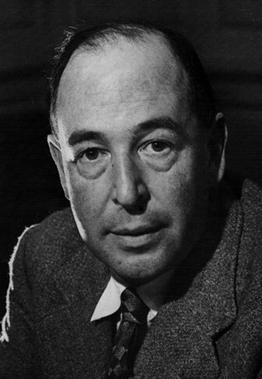
From his preface (1952?) to Mere Christianity - emphasis mine:
So much for my omissions on doctrine. In Book III, which deals with morals, I have also passed over some things in silence, but for a different reason. Ever since I served as an infantryman in the first world war I have had a great dislike of people who, themselves in ease and safety, issue exhortations to men in the front line. As a result I have a reluctance to say much about temptations to which I myself am not exposed. No man, I suppose, is tempted to every sin. It so happens that the impulse which makes men gamble has been left out of my make-up; and, no doubt, I pay for this by lacking some good impulse of which it is the excess or perversion. I therefore did not feel myself qualified to give advice about permissable and impermissable gambling: if there is any permissable, for I do not claim to know even that. I have also said nothing about birth-control. I am not a woman nor even a married man, nor am I a priest. I did not think it my place to take a firm line about pains, dangers and expenses from which I am protected; having no pastoral office which obliged me to do so.
Remember that Lewis wrote this at a time when the transition in the world's culture and in Christianity was just beginning to take shape with regard to contraception. Though a change in thinking was occurring, there were still plenty of pastors preaching and teaching against birth control in the 40s and 50s. I wonder if he wouldn't have felt compelled to speak on this matter if he lived on into the 70s and beyond.
But it is that "pastoral office" point that caught my attention in this quote. Teaching in the church is, in fact, the job of the Office of Holy Ministry. I have, myself, wondered sometimes if I have, or currently am, overstepping my bounds in speaking about this subject now that there are pastors doing so. There are, after all, pastors who are authors on this blog, and I am increasingly reading pastors speaking out on their blogs and other discussion boards against contraception. The majority of pastors still see no problem with contraception, but I am much more optimistic than I used to be regarding this subject.
Things were not always the way they are today. There was a time just a few short years ago when I never heard ANY Lutheran pastor say anything against birth control. When I asked questions and expressed my concerns, I was labeled a pietist or legalist, nicknamed "The Hammer of God," and told with pastoral authority that the church doesn't have an official position on the subject. So I began researching the subject and found the Biblical historical teaching to be consistent with the natural law that convicted me against birth control.
When pastors turn from the Word of God and preach perverted doctrines, it is the DUTY of laymen to speak up. Perhaps those times are over with regard to birth control, yet I still feel that the historic position of the church on procreation is far from what I hear the majority of pastors preaching and teaching. Until I see that the tide is turned, I feel it is my duty as a layman to continue to speak on the historic position of the church on this issue. And I try my best to do most of that speaking by parroting what Luther and others in the Office of Holy Ministry have said before me - hence all the lengthy quotes in my posts.
What do you think?
Now, before I leave you with the thought that Lewis had nothing to say on the subject this blog deals with, let me provide just a couple other quotes:
Chastity is the most unpopular of the Christian virtues. There is no getting away from it: the old Christian rule is, "Either marriage, with complete faithfulness to your partner, or else total abstinence." Now this is so difficult and so contrary to our instincts, that obviously either Christianity is wrong or our sexual instinct, as it now is, has gone wrong. One or the other. Of course, being a Christian, I think it is the instinct which has gone wrong. But I have other reasons for thinking so. The biological purpose of sex is children, just as the biological purpose of eating is to repair the body. Now if we eat whenever we feel inclined and just as much as we want, it is quite true that most of us will eat too much: but not terrifically too much. One man may eat enough for two, but he does not eat enough for ten. The appetite goes a little beyond its biological purpose, but not enormously. But if a healthy young man indulged his sexual appetite whenever he felt inclined, and if each act produced a baby, then in ten years he might easily populate a small village. This appetite is in ludicrous and preposterous excess of its function.
[Mere Christianity, p. 49]
Or, how about this one:
...what we call man's power over Nature turns out to be a power exercised by some men over other men with Nature as its instrument.
It is, of course, a commonplace to complain that men have hitherto used badly, and against their fellows, the powers that science her given them. But that is not the point I am trying to make. I am not speaking of particular corruptions and abuses which an increase of moral virtue would cure: I am considering what the thing called 'Man's power over Nature' must always and essentially be ... All long-term exercises of power, especially in breeding, must mean the power of earlier generations over later ones.
[The Abolition of Man, p. 69]
And in his space trilogy, Lewis provides numerous allusions to the subject of the limiting of procreation. Most notably, in That Hideous Strength, the third book, the character Merlin refers to the woman who used contraception as the “falsest lady of any.”
… the Stranger was speaking and pointing at her as he spoke.
She did not understand the words; but Dimble did, and heard Merlin saying in what seemed to him a rather strange kind of Latin:
‘Sir, you have in your house the falsest lady of any at this time alive.’
And Dimble heard the Director answer him in the same language:
‘Sir, you are mistaken. She is doubtless like all of us a sinner; but the woman is chaste.’
‘Sir,’ said Merlin, ‘know well that she has done in Logres a thing of which no less sorrow shall come than came of the stroke that Balinus struck. For, Sir, it was the purpose of God that she and her lord should between them have begotten a child by whom the enemies should have been put out of Logres for a thousand years.’
‘She is but lately married,’ said Ransom. ‘The child may yet be born.’
‘Sir,’ said Merlin, ‘be assured that the child will never be born, for the hour of its begetting is passed. Of their own will they are barren…’
[That Hideous Strength, 275-276]
10.19.2007
A Researcher Requests Your Assistance
Do you know of any publications, conference papers, convention proceedings, sermons, personal anecdotes, or other sources that could contribute toward a history of Lutheran attitudes concerning contraception? I am tracing the 20th-century shift from opposition to acceptance and would value your assistance. Confidentiality will be provided upon request.
Ryan C. MacPherson, Ph.D.
Dept. of History
Bethany Lutheran College
Mankato, MN 56001
lutheranbioethics@hotmail.com
Ryan C. MacPherson, Ph.D.
Dept. of History
Bethany Lutheran College
Mankato, MN 56001
lutheranbioethics@hotmail.com
10.16.2007
Casuistry in Family Planning: a "Fair-Seeming" Work?

We must distinguish between the Glory of the Word of God ... and fair-seeming works. ...
Saul seems to be doing the right thing (1 Sam. 15) when he does not kill all the cattle of the Amalekites but keeps the choicer animals for worship. But because God had clearly given the command that all had to be killed, this deed provokes Him to extreme anger. Therefore the fair-seeming work is nothing but an abomination, because it was undertaken against the Word of God.
(Luther's Works, vol. 2:355, as quoted in Steinbronn, Worldviews, CPH 2007, p 125)

Abraham "obeys God's command without arguing." (LW 3:173) He simply cuts the throat of this baneful "Why?" and tears it out of his heart by the roots. He takes reason captive and finds satisfaction in the one fact that he who gives the command is just, good, and wise; therefore, he cannot command anything but what is just, good, and wise, even if reason does not make any sense of it.
(Steinbronn, Worldviews, CPH 2007, p 128)
I'm interested in hearing how others would apply this truth regarding faith to what we might call cases in which casuistry allows for family planning in some instances. Also, how does this apply to the Roman Catholic argument from reason regarding "separating intercourse from procreation" leading to the praise of NFP in exceptional cases. If the Word of God is clear that family planning is an abomination in God's sight, can these cases of casuistry be anything but "fair-seeming" works?
8.03.2007

7.18.2007
Father Abraham had many sons...

Muhammad is now second only to Jack as the most popular name for baby boys in Britain and is likely to rise to No 1 by next year, a study by The Times has found. The name, if all 14 different spellings are included, was shared by 5,991 newborn boys last year, beating Thomas into third place, followed by Joshua and Oliver.
Scholars said that the name’s rise up the league table was driven partly by the growing number of young Muslims having families, coupled with the desire to name their child in honour of the Prophet.
Overall, Muslims account for three per cent of the population, about 1.5 million people. However, the Muslim birth rate is roughly three times higher than the non-Muslim one.
It would seem that even if they consider the Torah as from God, but presently corrupted by man, some of Father Abraham's children do still take seriously the exhortation to "Be fruitful and multiply."
A Habitable World?
In London last week, the Optimum Population Trust called for Britons to have "one child less" because the United Kingdom's "high birth rate is a major factor in the current level of climate change, which can only be combated if families voluntarily limit the number of children they have."
Story by Mark Steyn.
Allan Carlson comments in his e-mail newsletter:
The Optimum Population Trust’s hysteria is occasioned by a recent blip in British child-bearing, which rose from 1.8 children per woman in 2005 to 1.87 in 2006. Demographers attribute the increase to more career women having children later in life.
This is still far below the post-World War II high for Britain, 2.93 in 1964. More significantly, it’s well below replacement level of 2.11. Even if the current rate is maintained, the United Kingdom will still see its population decline in every generation, absent massive immigration.
7.17.2007
Report on contraception out soon
The report takes a comprehensive look at a myriad of birth-control options, offering both medical and spiritual perspectives. It was prepared by the Sanctity of Human Life Committee, a program of LCMS World Relief/Human Care, in response to Resolution 6-10, approved at the 2004 LCMS convention. The resolution requested a review of birth-control products and methods — including clarification on those that can act as abortifacients — and asked that this information be made available to LCMS pastors and laypeople.
The report examines everything from abstinence to the latest hormonal products and intrauterine devices. It opens with a discussion of “God's original design for the beautiful vocation of marriage and how that vocation has often been negatively affected and influenced by our sinful society,” said LCMS Life Ministries Director Maggie Karner.
The Sanctity of Human Life Committee charged three members with writing the report for committee approval. In addition to Karner, the report's authors are Rev. Dr. Kevin Voss, director of the Concordia Bioethics Institute and a Concordia University Wisconsin professor, and Dr. Sherry Prowatzke, an obstetrician/gynecologist in Waukesha, Wis.
The report will be available as a free download at http://worldrelief.lcms.org by mid-July.
Subscribe to:
Posts (Atom)


 Posts
Posts